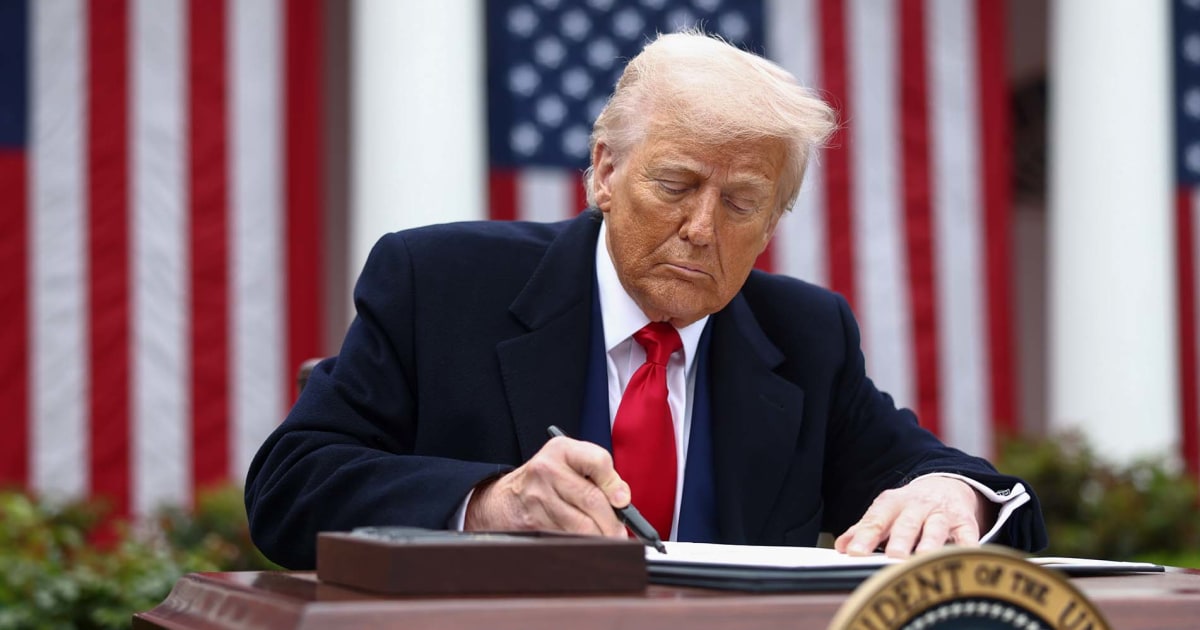
Global Markets on Edge as Trump’s Tariff Impact Sparks International Reactions
Global financial markets tumbled this week as former President Donald Trump’s proposed sweeping tariffs on imported goods rattled investors and triggered sharp reactions from U.S. allies. Announced Monday, the aggressive trade measures—targeting $300 billion in annual imports—sent the Dow Jones Industrial Average down 2.3%, while European and Asian markets followed suit. Economists warn the policies could reignite trade wars, destabilize supply chains, and provoke retaliatory measures from major partners like the EU and China.
Market Turmoil and Immediate Economic Fallout
Within hours of Trump’s announcement, market volatility surged. The S&P 500 dropped 1.8%, and tech-heavy Nasdaq fell 2.5%, with automakers and semiconductor stocks among the hardest hit. Analysts at JPMorgan Chase estimate the tariffs could raise consumer prices by up to 3.4% annually if fully implemented. Meanwhile, the U.S. 10-year Treasury yield dipped to 4.1%, signaling investor flight to safety.
“This is déjà vu for markets that weathered the 2018-2019 trade wars,” said Claudia Lawson, chief economist at the Brookings Institution. “The difference now is inflation remains stubbornly high, so these tariffs could further squeeze households and delay Fed rate cuts.” Key impacts include:
- Commodity Shifts: Aluminum and steel prices rose 6% on fears of renewed supply constraints.
- Sector Vulnerabilities: Auto imports face a proposed 25% levy, threatening a $150 billion industry.
- Currency Fluctuations: The yen and euro gained against the dollar as traders hedged risks.
International Backlash and Strategic Responses
Leaders from Berlin to Beijing condemned the tariffs as “economic unilateralism.” The European Commission announced it is drafting countermeasures, potentially targeting U.S. agricultural exports. China’s Commerce Ministry warned of “defensive actions,” recalling its 2019 retaliation that slashed U.S. soybean purchases by 75%.
However, some U.S. policymakers defended the move. “Strategic industries need protection from unfair competition,” argued Senator Josh Hawley (R-MO), citing a 2023 Trade Gap Report showing a $1.1 trillion deficit. Conversely, the U.S. Chamber of Commerce cautioned that “tariffs are taxes on American businesses and consumers.”
Historical Context and Long-Term Risks
Trump’s earlier tariffs on $370 billion in Chinese goods in 2018-2020 resulted in:
- U.S. GDP growth slowing by 0.3% annually (Peterson Institute for International Economics)
- 200,000 manufacturing job losses (Federal Reserve data)
Experts fear renewed tensions could fracture alliances like the USMCA or CPTPP. “The WTO is already weakened,” noted trade lawyer Elaine Zhao. “Further fragmentation risks a ‘spaghetti bowl’ of conflicting bilateral rules.”
What Comes Next for Global Trade?
With the G7 summit looming in June, diplomatic tensions are expected to escalate. The IMF revised its 2024 global growth forecast downward by 0.5%, citing trade uncertainty. Meanwhile, corporations are bracing for disruptions—Apple and Tesla reportedly accelerated plans to shift production to India and Vietnam.
For investors, analysts recommend diversifying into commodities and defensive stocks. “The volatility isn’t ending soon,” warned BlackRock’s global strategist Mark Roberts. “Supply chain resilience is now as critical as profitability.”
Stay informed with our daily market updates— subscribe to our newsletter for real-time analysis on trade policy shifts.
See more CCTV News Daily