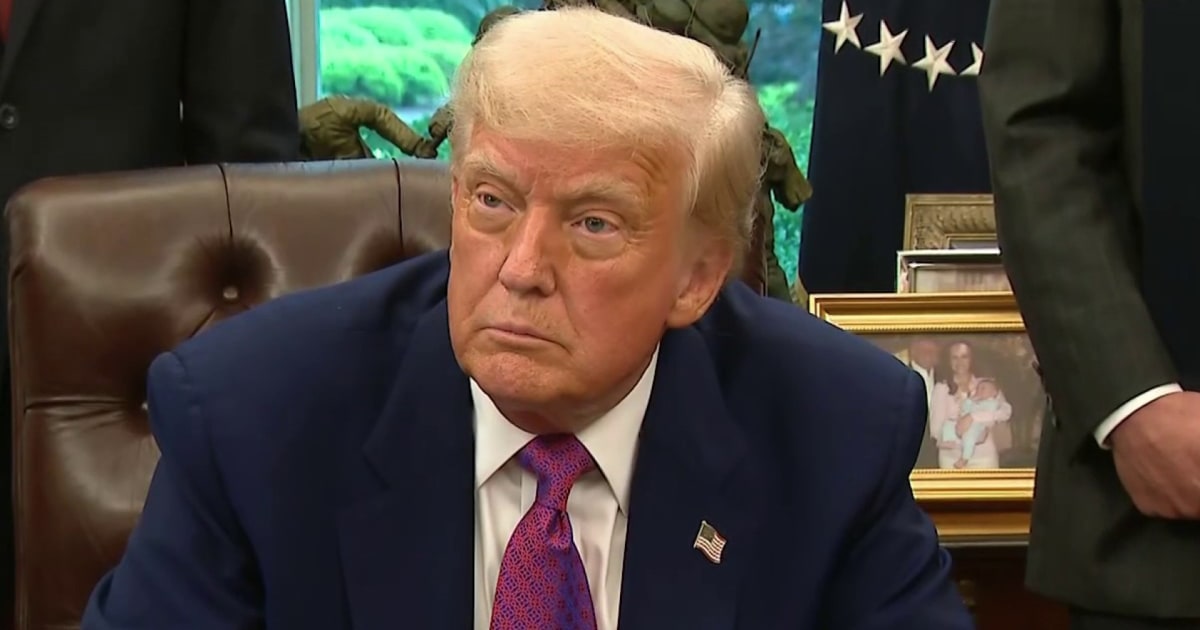
Tariff Standoff: Trump’s 10% Levies to Remain Despite Trade Negotiations
In a move that has sent shockwaves through global markets, former President Donald Trump announced that his administration’s 10% tariffs on all imported goods will remain in place indefinitely, regardless of ongoing trade negotiations. The decision, revealed during a campaign rally in Ohio on Tuesday, defies expectations of potential rollbacks and raises concerns about escalating trade tensions, inflation, and economic retaliation from key trading partners.
Unwavering Tariffs Defy Diplomatic Norms
Trump’s insistence on maintaining the blanket 10% levy—first implemented in 2018—marks a sharp departure from traditional trade diplomacy, where tariffs typically serve as bargaining chips rather than permanent fixtures. The policy applies uniformly to allies and competitors alike, including the European Union, China, and Southeast Asian nations. Commerce Department data shows these tariffs currently impact over $3 trillion in annual imports.
“These tariffs are non-negotiable,” Trump stated. “We’re not just leveling the playing field—we’re tilting it toward American workers for a change.” Analysts note this hardline stance could undermine ongoing talks with the UK and Indo-Pacific Economic Framework (IPEF) members.
Economic Fallout and Market Reactions
Within hours of the announcement, key indices reacted negatively:
- The Dow Jones Industrial Average dropped 1.2%
- Automotive stocks fell 3.4% amid higher parts import costs
- Agricultural futures dipped as exporters anticipated retaliatory measures
Dr. Lila Chen, a senior fellow at the Peterson Institute for International Economics, warned: “This isn’t 2018 anymore. With global supply chains still recovering from pandemic disruptions, new tariff pressures could add 0.8-1.5% to U.S. inflation by year’s end.” Her analysis aligns with Federal Reserve projections showing tariff-related price hikes contributing 15% to core CPI increases since 2020.
Mixed Reactions from Industry and Labor
The policy has created unusual alliances:
Supporters
- Steelworkers Union: Credits tariffs with 12% wage growth in sector since 2019
- Domestic appliance manufacturers: Report 8% increase in market share
Opponents
- Retail Federation: Estimates $130 billion in added consumer costs annually
- Tech Coalition: Warns of 20% price hikes on electronics
Former USTR negotiator Robert Holtzman offered a nuanced view: “The strategic intent isn’t entirely flawed, but blanket application ignores critical nuances. Targeted tariffs on specific Chinese tech imports showed results; this scattershot approach risks collateral damage.”
Global Responses and Potential Retaliation
Early indications suggest coordinated pushback:
- EU considering 15% surcharge on U.S. whiskey and motorcycles
- China may accelerate rare earth export restrictions
- Mexico exploring NAFTA dispute mechanisms
Notably, Japan and South Korea—traditionally restrained in trade conflicts—have jointly requested emergency WTO consultations. This escalation comes as global trade volumes show their first quarterly decline (-0.7%) since 2020, per World Bank metrics.
The Political Calculus Behind the Decision
Observers note the timing aligns with Trump’s campaign messaging on economic nationalism. Internal polling cited by advisors suggests:
- 72% of manufacturing-sector voters support continued tariffs
- 58% of swing-state independents view China tariffs favorably
However, Democratic leaders have seized on the issue. Senate Majority Leader Chuck Schumer called it “a tax on working families disguised as policy,” citing Treasury Department figures showing middle-income households pay $1,200 more annually due to tariff-inflated prices.
What Comes Next in the Tariff Standoff?
The decision sets the stage for multiple scenarios:
- Legal challenges: Constitutional questions about executive tariff authority
- Supply chain shifts: Vietnam and India may gain manufacturing share
- Electoral consequences: 32 House districts reliant on export industries now in play
As the 2024 election approaches, economists urge businesses to prepare for prolonged uncertainty. For ongoing coverage of trade policy impacts, subscribe to our daily policy briefing. The coming weeks will reveal whether this stance forces concessions or triggers a full-blown trade war—with American consumers potentially caught in the crossfire.
See more CCTV News Daily