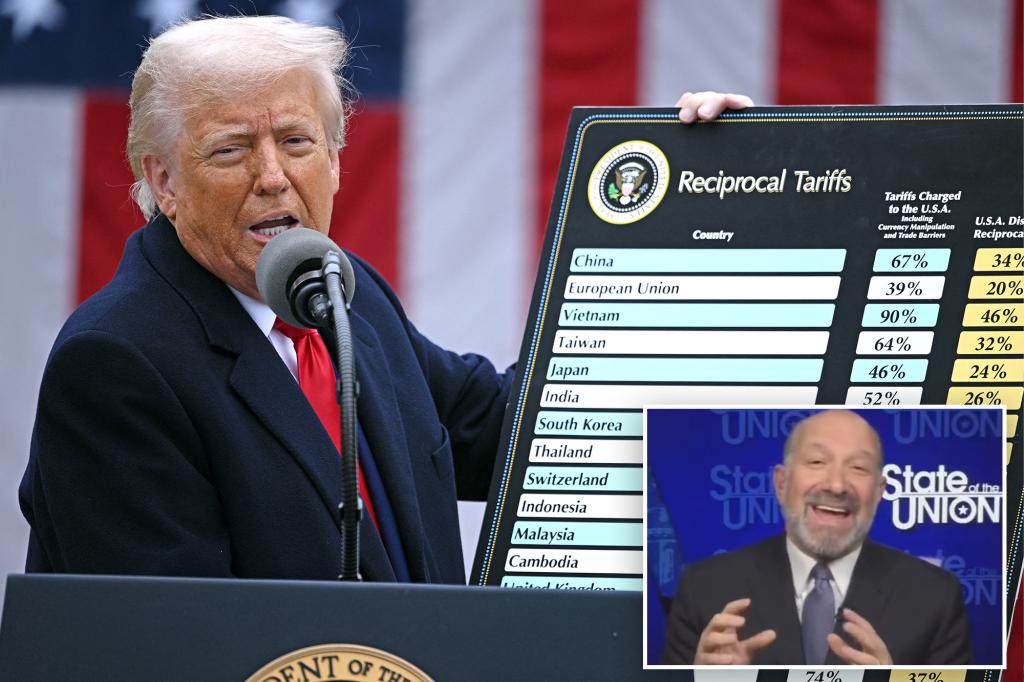
Former President Donald Trump will not reduce tariffs below 10% if re-elected, Commerce Secretary revelations confirm. This policy, expected to take effect in 2025, signals a continuation of aggressive trade protections that could inflate consumer prices, disrupt supply chains, and provoke retaliatory measures from trading partners. Economists warn the decision may reignite global trade tensions while supporters argue it safeguards domestic industries.
The Economic Rationale Behind the 10% Tariff Floor
Trump’s insistence on maintaining tariffs aligns with his long-standing “America First” agenda. During his first term, average U.S. tariffs rose from 1.6% to over 3.4%, with some Chinese imports facing 25% duties. The proposed 10% baseline would apply broadly, potentially covering $3.7 trillion in annual imports. Proponents highlight that tariffs:
- Generated $85 billion in federal revenue (2018-2021)
- Boosted steel production by 12% in protected sectors
- Reduced the trade deficit by $102 billion in 2019
“This isn’t just protectionism—it’s strategic reshoring,” argues Dr. Linda Petrakis, trade economist at the Hudson Institute. “When you consider that 70% of critical pharmaceuticals come from overseas, a 10% floor gives negotiators leverage to bring production home.”
Industry-Specific Impacts and Market Reactions
Automakers and retailers brace for the heaviest blows. The National Retail Federation estimates a 10% blanket tariff could:
- Increase average household costs by $1,500 annually
- Trigger 15-20% price hikes on electronics and apparel
- Eliminate 584,000 retail jobs within 18 months
Conversely, domestic manufacturers welcome the news. “Our aluminum extrusion business grew 22% under previous tariffs,” notes James Corbin, CEO of Midwestern Metals. “This policy lets us compete without dumping from state-subsidized foreign firms.”
Global Trade Relations at a Crossroads
The EU and China have already drafted retaliatory measures, including:
- 25% tariffs on U.S. agricultural exports (EU contingency plan)
- Export restrictions on rare earth minerals (China’s proposed counter)
“We’re staring down a $1 trillion reduction in global trade flows,” warns Pascal Lamy, former WTO Director-General. “The 2018-2019 trade war reduced U.S. GDP growth by 0.3% annually—this could be three times worse.” Emerging markets like Vietnam and Mexico may benefit as companies seek tariff-avoidant manufacturing hubs.
Consumers Face the Ripple Effects
Inflationary pressures loom largest for low-income households. A Brookings study found Trump’s earlier tariffs effectively taxed the bottom income quintile at 1.5 times the rate of top earners. Specific impacts include:
- 12-18% cost increases on budget smartphones and appliances
- 5-8% grocery price spikes for tariffed items like canned tuna and cheese
- Potential 0.7% bump in core inflation within 12 months
“Tariffs function like a regressive sales tax,” notes consumer advocate Rachel Nguyen. “When Walmart passes on 10% higher costs for sneakers, that’s coming straight from a single mom’s paycheck.”
The Path Forward for Businesses
Supply chain consultants recommend companies:
- Diversify suppliers to non-tariff countries (e.g., Indonesia instead of China)
- Accelerate automation to offset labor cost disparities
- Lobby for product-specific exclusions during implementation
As political strategists note, the 10% threshold may be a starting position rather than a final one. “This is classic Trump negotiation,” observes GOP policy analyst Mark Stephens. “He’s anchoring high so ‘compromises’ down to 7-8% feel like victories later.”
Looking Beyond 2025: Long-Term Strategic Shifts
The tariff stance reflects deeper economic realignments:
- Nearshoring: Mexican manufacturing imports grew 28% since 2020
- Stockpiling: 43% of manufacturers increased inventory buffers post-COVID
- Substitution: U.S. polyester production up 19% as cotton alternatives
For investors, the policy favors sectors like energy (protected fracking), heavy machinery, and defense contracting. Tech and consumer discretionary stocks face headwinds—the S&P 500’s tariff-sensitive sectors underperformed by 11% during previous trade wars.
As businesses and governments prepare for this new era of protected trade, one truth becomes clear: in global economics, there are no unilateral actions—only chain reactions. Those who start adapting their supply chains and pricing models today will weather the coming shifts best. Subscribe to our trade policy newsletter for ongoing analysis of tariff developments and mitigation strategies.
See more CCTV News Daily