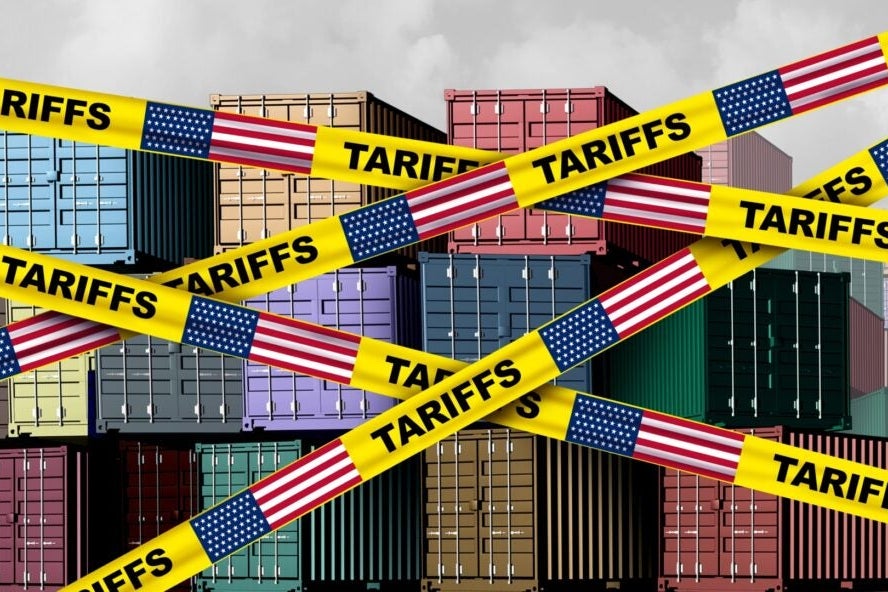
Trump’s ‘Liberation Day’ Tariffs Ignite Market Chaos as China Retaliates
Former President Donald Trump’s surprise announcement of sweeping tariffs on Chinese goods, timed to coincide with Taiwan’s “Liberation Day,” has triggered a sharp downturn in Asian markets and drawn a fierce response from Beijing. The move, unveiled on October 25, 2023, targets $60 billion worth of Chinese imports with duties up to 50%, escalating trade tensions that analysts warn could destabilize global supply chains.
Markets Reel as Tariffs Take Immediate Toll
Within hours of the announcement, key Asian indices plunged, with Hong Kong’s Hang Seng dropping 3.2% and Shanghai Composite falling 2.7%. The ripple effects spread globally, as U.S. futures pointed to a 1.8% decline at opening. Semiconductor stocks bore the brunt of selling pressure, with TSMC shares tumbling 5.3%.
“This is economic brinksmanship at its most dangerous,” said Dr. Evelyn Wong, senior economist at the Asia-Pacific Economic Forum. “By linking tariffs to a politically charged date, Trump has turned a trade measure into a geopolitical flashpoint.”
The tariffs specifically target:
- Electric vehicles and batteries (50% duty)
- Advanced semiconductors (45%)
- Steel and aluminum products (35%)
- Pharmaceutical ingredients (30%)
China’s Forceful Countermeasures
China’s Commerce Ministry responded within six hours, announcing reciprocal tariffs on $60 billion of U.S. exports, including agricultural products, aircraft parts, and crude oil. More significantly, Beijing hinted at “non-tariff measures,” sparking concerns about potential export restrictions on rare earth minerals critical for tech manufacturing.
“We will defend our national interests with all necessary means,” stated Commerce Minister Li Chengrui during a hastily arranged press conference. “This reckless provocation during a sensitive historical period will not go unanswered.”
The timing of Trump’s announcement—on the anniversary of Taiwan’s retrocession from Japanese rule—has added fuel to the fire. While the U.S. maintains a “One China” policy, the symbolic alignment with a date celebrated in Taiwan but contested by Beijing has amplified diplomatic tensions.
Economic Fallout and Sector-Specific Impacts
Analysts at Morgan Stanley estimate the tariffs could shave 0.8% off global GDP growth in 2024 if the trade war escalates further. Supply chain disruptions are already emerging:
- Shipping rates for Asia-U.S. routes surged 15% overnight
- Automakers report parts shortages at Mexican border factories
- Agricultural futures show corn prices dropping 4% on China retaliation fears
Divergent Views on Trade Strategy
Supporters argue the tariffs protect strategic industries. “Finally, someone’s standing up to China’s unfair practices,” said manufacturing lobbyist Jim Bowers. “Our steelworkers have been undercut for decades.”
However, tech leaders express alarm. “These semiconductor tariffs will raise consumer prices 18-22% on electronics,” warned Silicon Valley Investors Coalition director Maria Fernandez. “We’re shooting ourselves in the foot on AI competitiveness.”
Historical data suggests mixed results from previous tariffs. A 2022 Peterson Institute study found that Trump’s 2018-2019 tariffs:
- Cost U.S. consumers $51 billion annually
- Failed to significantly reduce the trade deficit
- Resulted in 300,000 manufacturing job losses
Geopolitical Dimensions and Future Scenarios
The timing coincides with delicate negotiations over Taiwan’s participation in November’s APEC summit. Some analysts see the tariffs as leverage, while others warn they could derail diplomatic progress.
“This isn’t just about trade balances,” noted Georgetown University professor Daniel Whitman. “It’s testing China’s red lines while rallying Trump’s political base ahead of election season.”
Possible escalation paths include:
- China restricting rare earth exports (controls 80% of global supply)
- U.S. expanding tariffs to consumer electronics
- Secondary sanctions on third-party countries circumventing restrictions
What Comes Next for Global Trade?
With WTO dispute mechanisms weakened, multilateral resolution appears unlikely. The EU has called for emergency trade talks, while ASEAN nations fear becoming collateral damage in the U.S.-China standoff.
Market watchers recommend:
- Diversifying supply chains away from China
- Hedging against commodity price volatility
- Preparing for prolonged tech sector disruptions
As the situation develops, businesses and investors must navigate an increasingly fragmented global trading system. The coming weeks will reveal whether this marks another chapter in managed competition or spirals into full-blown economic warfare.
For ongoing coverage of trade policy impacts, subscribe to our daily market briefing.
See more CCTV News Daily