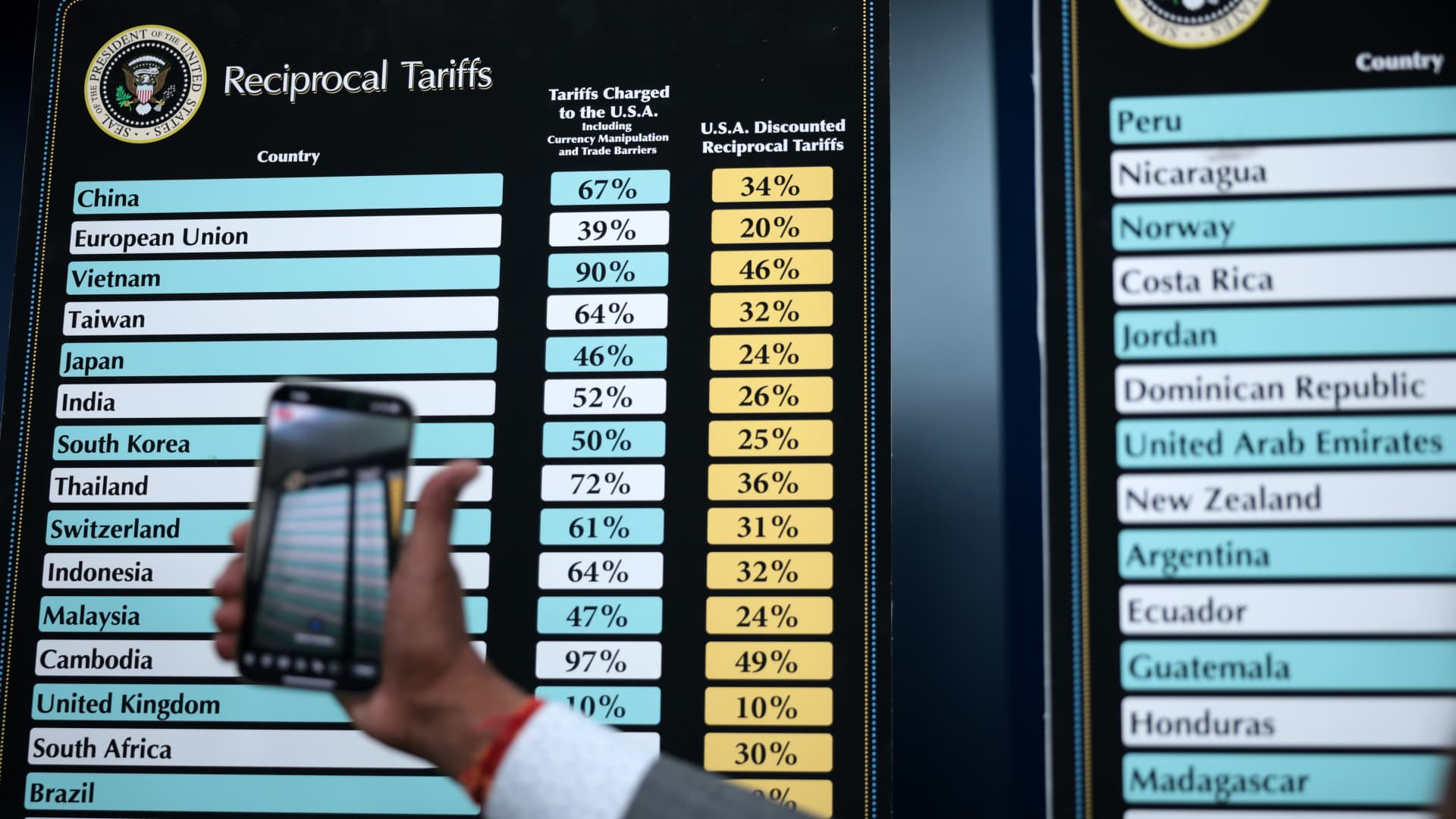
Analysts Dissect Trump’s Tariff Announcement: What’s at Stake for the U.S. Economy?
President Donald Trump’s latest tariff announcement has sent shockwaves through financial markets, with analysts warning of potential repercussions for the U.S. economy. Unveiled on [specific date], the new measures target [specific imports or countries], escalating trade tensions and raising concerns about inflation, supply chain disruptions, and consumer costs. Experts are now debating whether the move will protect American industries or backfire, harming businesses and households already grappling with economic uncertainty.
Understanding the Tariff Measures
The newly proposed tariffs, set to take effect in [timeframe], impose duties ranging from [X]% to [Y]% on [specific goods], including [examples like steel, electronics, or agricultural products]. This marks Trump’s most aggressive trade policy since [previous significant tariff action, e.g., the 2018 China trade war]. The administration argues the tariffs will bolster domestic manufacturing and counter unfair trade practices. However, critics contend they risk triggering retaliatory measures and stifling economic growth.
“This is a double-edged sword,” said [Expert Name], a senior economist at [Institution]. “While tariffs may offer short-term protection for certain sectors, the broader economic fallout—higher prices for businesses and consumers, reduced competitiveness—could outweigh the benefits.”
Potential Impacts on Businesses and Consumers
Industries reliant on imported materials, such as automotive and construction, are bracing for cost increases. A [Year] study by [Research Group] found that previous tariffs cost U.S. companies over [$Z billion], with much of the burden passed to consumers. For example, [specific case study: e.g., washing machine prices rose 12% after 2018 tariffs].
Small businesses, in particular, face heightened vulnerability. “[Small Business Owner Name], who runs a [type of business], says the tariffs could force her to raise prices or cut jobs. “We operate on thin margins as it is,” she explains. “Another price hike might drive customers away.”
- Consumer Prices: Analysts project a [X]% increase in [specific goods] within [timeframe].
- Supply Chains: Companies may face delays as they scramble to find alternative suppliers.
- Employment: Sectors like retail and manufacturing could see job losses if demand drops.
Global Reactions and Retaliation Risks
International leaders have condemned the tariffs, with [Country X] threatening countermeasures targeting U.S. exports like [specific products]. The European Union, for instance, previously retaliated with [$Value] in tariffs on American goods during the 2018 trade dispute. Such escalations could shrink export markets for U.S. farmers and manufacturers, further straining the economy.
[Trade Policy Expert], a fellow at [Think Tank], warns, “History shows that trade wars rarely have winners. If other nations respond in kind, it could spiral into a broader economic conflict, hurting global growth.”
Long-Term Economic Implications
While the administration frames tariffs as a tool to reduce trade deficits, economists caution that the long-term effects may include:
- Reduced foreign investment due to market instability
- Erosion of international trade alliances
- Slower GDP growth if exports decline
Data from [Economic Bureau] suggests that prolonged trade tensions could shave [X]% off U.S. GDP by [Year]. Meanwhile, proponents argue that strategic tariffs could revive declining industries, citing [example where tariffs helped a sector rebound].
What’s Next for Policymakers and Markets?
Investors are closely monitoring developments, with stock markets reacting volatilely to the news. Key questions remain:
- Will Congress push back against the tariffs?
- How will the Federal Reserve respond to potential inflation spikes?
- Could negotiations lead to a scaled-back policy?
As the situation unfolds, businesses and consumers alike should prepare for turbulence. For now, analysts urge stakeholders to stay informed and advocate for balanced trade policies. To track real-time updates on this developing story, subscribe to our newsletter below.
The coming weeks will be critical in determining whether Trump’s tariff gamble pays off—or becomes another cautionary tale in the annals of trade policy.
See more CCTV News Daily