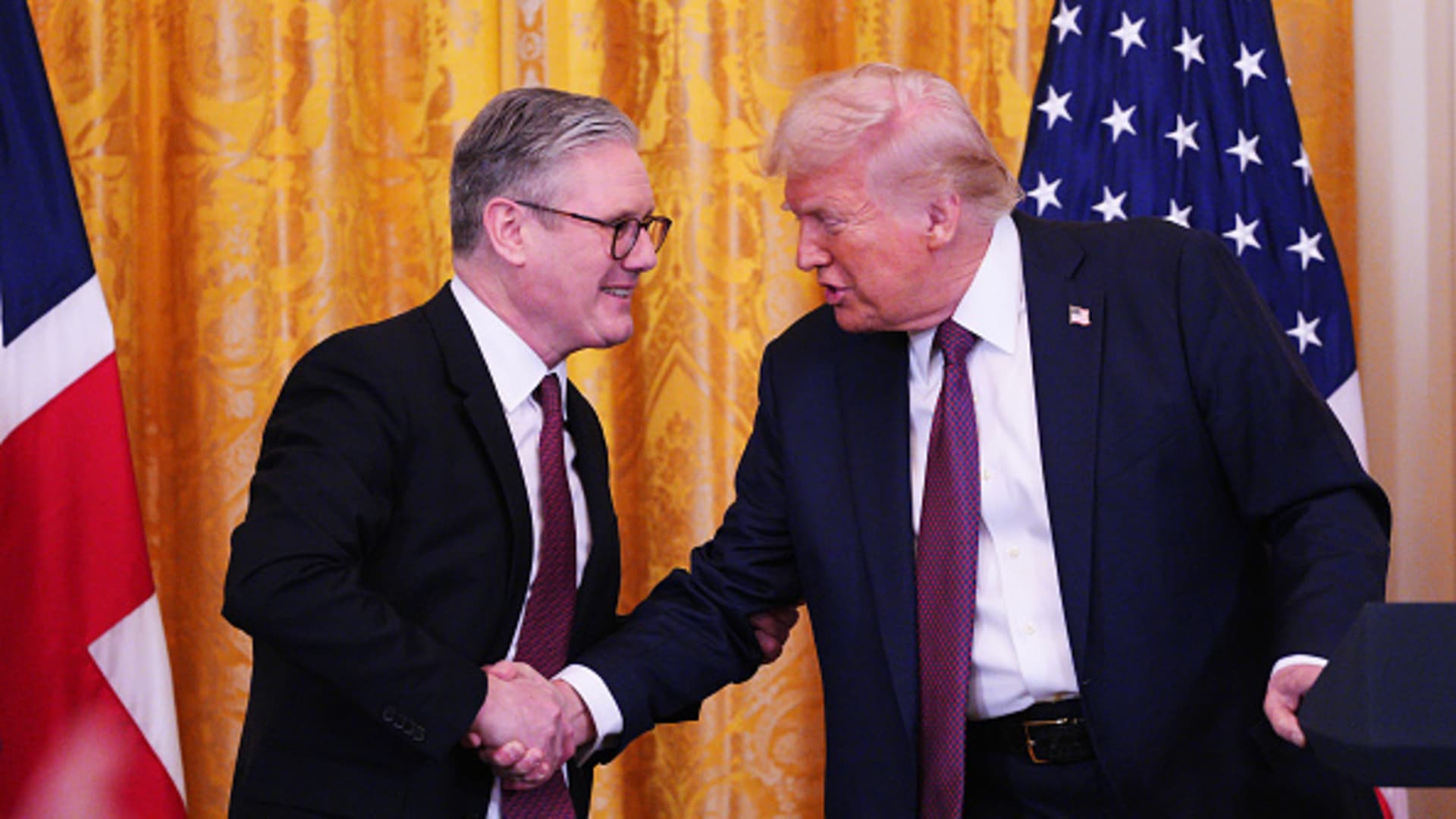
Trump Hints at Tariff-Free Trade Deal Between U.S. and U.K.: What’s at Stake?
In a recent statement, former President Donald Trump suggested that the United States and the United Kingdom may be on the verge of a groundbreaking trade agreement that could eliminate tariffs. This revelation comes at a time when both countries are seeking to bolster their economic ties post-Brexit and navigate the complexities of global trade. But what does this potential tariff-free trade deal mean for the economies of both nations, and what implications could it have on global trade dynamics?
The Context of U.S.-U.K. Trade Relations
The U.S. and U.K. have historically enjoyed a robust trading relationship, characterized by shared values and mutual economic interests. However, the landscape has changed significantly in recent years, particularly following the U.K.’s exit from the European Union. As the U.K. seeks to establish new trade agreements independent of EU regulations, a tariff-free trade deal with the U.S. could represent a significant opportunity for both sides.
In 2019, the U.S. was the U.K.’s largest trading partner, with bilateral trade worth approximately $232 billion. This figure underscores the importance of a seamless trading relationship, which could be enhanced further by eliminating tariffs. Tariffs can increase the cost of goods, thereby affecting consumers and businesses alike. A deal that removes these barriers could lead to lower prices for consumers and increased competitiveness for exporters.
What’s at Stake with a Tariff-Free Trade Deal?
Trump’s hint at a potential tariff-free trade agreement raises several questions about what’s truly at stake for both nations.
- Economic Growth: A tariff-free agreement could stimulate economic growth in both countries by encouraging trade and investment. Reduced tariffs would likely lead to an increase in the volume of goods exchanged, benefiting manufacturers and consumers.
- Job Creation: Increased trade often translates to job creation. U.S. companies could expand operations in the U.K. and vice versa, resulting in more employment opportunities in both nations.
- Political Relations: Strengthening economic ties through a trade deal could foster closer political relations between the U.S. and U.K., enhancing cooperation on global issues such as security and climate change.
Potential Challenges and Concerns
While the prospect of a tariff-free trade deal is optimistic, it’s not without challenges. Here are some potential hurdles that could arise:
- Regulatory Divergence: The U.K. has already diverged from EU regulations, and any trade deal with the U.S. will need to navigate these differences. Regulatory alignment is crucial for smooth trade operations.
- Political Opposition: Within both the U.S. and U.K., there may be political factions that oppose a trade deal. Concerns about job losses in certain industries, especially manufacturing, could fuel resistance.
- Global Trade Dynamics: The introduction of a tariff-free trade agreement could shift global trade dynamics, potentially leading to tensions with other trading partners, particularly those in the EU.
Economic Implications for Key Industries
Several key industries could stand to benefit significantly from a tariff-free trade deal between the U.S. and U.K.:
- Automotive: The automotive industry is a critical sector for both economies. Reducing tariffs could enhance the competitiveness of both U.S. and U.K. car manufacturers, potentially leading to lower prices for consumers and increased sales.
- Aerospace: The U.S. and U.K. are leaders in aerospace manufacturing. A tariff-free agreement could foster collaboration in technology and innovation, benefiting companies like Boeing and Rolls-Royce.
- Pharmaceuticals: The pharmaceutical industry could also see a boost. With both countries being major players in drug development and manufacturing, eliminating tariffs could enhance access to vital medicines.
Consumer Impact: A Win for Shoppers?
From a consumer perspective, a tariff-free trade deal could mean significant savings. Lower tariffs often lead to reduced prices on imported goods. For instance, consumers could see lower prices on British goods in the U.S. market, such as whisky and clothing, while U.K. consumers may benefit from cheaper American products like electronics and agricultural goods.
Moreover, a competitive market could foster innovation, as companies strive to offer better products at lower prices. This, in turn, enhances consumer choice and quality.
The Long-Term Vision: Beyond Tariffs
While the immediate focus is on the elimination of tariffs, a successful trade deal could pave the way for broader economic cooperation. Future discussions might include:
- Investment Opportunities: Encouraging mutual investments between U.S. and U.K. businesses can lead to greater economic integration.
- Technology Sharing: Collaboration in technology and innovation can bolster both economies, particularly in sectors like green energy and digital services.
- Supply Chain Resilience: A tariff-free agreement could help both countries build more resilient supply chains, which is increasingly crucial in today’s global market.
The Global Perspective: What Other Nations Think
The potential U.S.-U.K. tariff-free trade deal could have ramifications beyond just these two nations. Other countries may view this development with caution, particularly those in the European Union. A strong U.S.-U.K. trade relationship could lead to competitive disadvantages for EU countries, potentially intensifying trade negotiations and strategies.
Additionally, countries like Canada and Australia, which have their own trade agreements with the U.S. and U.K., may feel compelled to revisit their terms to remain competitive.
Conclusion: A Step Towards Economic Collaboration
Trump’s hints at a potential tariff-free trade deal between the U.S. and U.K. could mark a pivotal moment in international trade relations. While the prospects are bright, the journey to a successful agreement will require careful navigation of regulatory, political, and economic landscapes.
Ultimately, if executed effectively, this deal could not only enhance the economic fortunes of both nations but also set a precedent for future trade agreements globally. As both countries gear up for negotiations, the world will be watching closely to see how this unfolds and what it means for the future of international trade.
See more CCTV News Daily