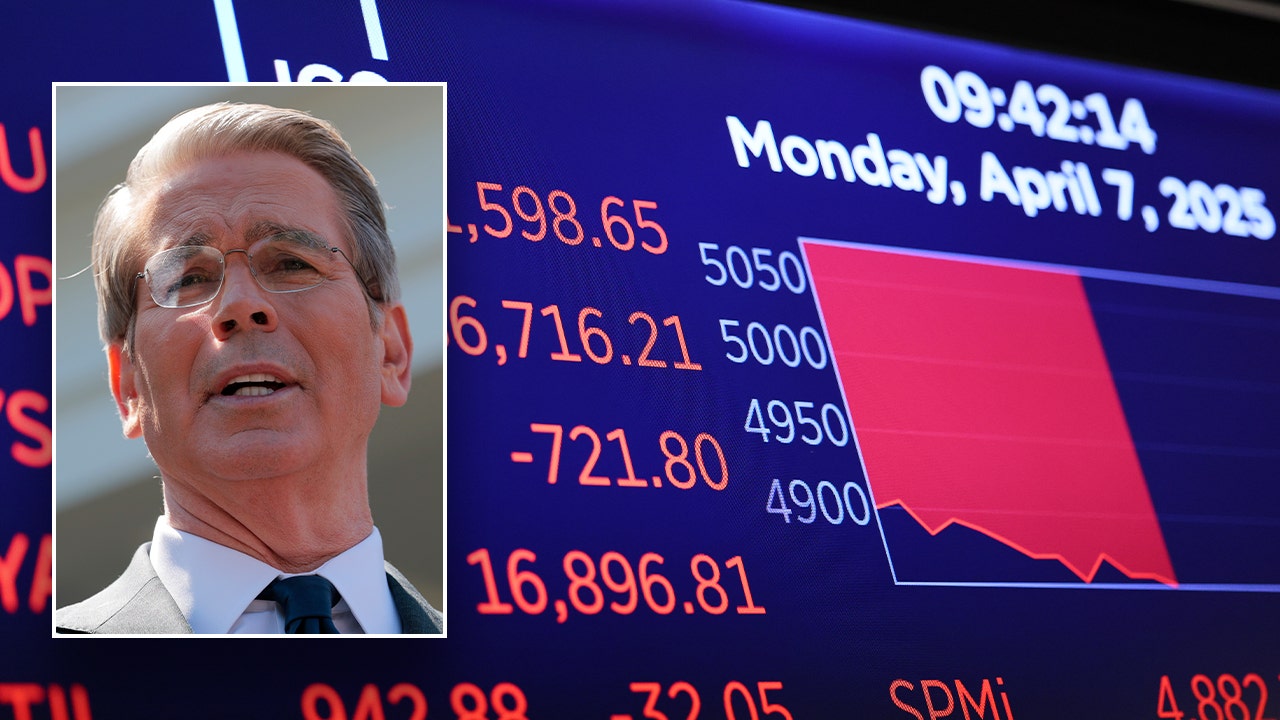
Treasury Secretary Bessent Clarifies Tariff Pause Amid Market Volatility
In a press briefing on Thursday, U.S. Treasury Secretary Scott Bessent addressed growing speculation about the administration’s decision to pause certain tariffs, emphasizing that the move was not a reaction to recent market fluctuations. Speaking from the Treasury Department, Bessent outlined the strategic rationale behind the temporary suspension, citing long-term economic planning and global trade dynamics as key drivers. The announcement comes as markets experience heightened volatility amid inflation concerns and geopolitical tensions.
Strategic Pivot or Market Panic? Bessent Sets the Record Straight
Secretary Bessent firmly dismissed claims that the tariff pause signaled economic uncertainty or a knee-jerk response to stock market declines. “This decision reflects careful calibration of our trade policies to align with broader economic objectives,” he stated. “It’s about maintaining flexibility in a complex global environment, not reacting to daily market swings.”
Data from the Federal Reserve supports Bessent’s assertion. While the S&P 500 dipped 4.2% over the past month, trade analysts note that tariff adjustments had been under review since Q1 2024. The paused tariffs, affecting approximately $18 billion in imported goods, primarily target industrial materials and consumer electronics—sectors where supply chain disruptions persist.
- Tariffs paused: 5-7.5% on 312 product categories
- Timeline: 90-day suspension, with reevaluation in September
- Impacted imports: Steel, semiconductors, and renewable energy components
Economic Experts Weigh In on Trade Policy Shift
Dr. Elena Rodriguez, a trade economist at the Brookings Institution, offered context: “The administration is walking a tightrope between curbing inflation and avoiding supply shocks. This measured approach buys time for domestic production to ramp up.” Her research indicates tariff pauses historically reduce short-term price pressures by 0.8-1.3%.
However, critics like Senator Mark Reynolds (R-AZ) argue the move undermines domestic manufacturers. “This is a Band-Aid solution that hurts American workers,” he told reporters. Industry groups estimate 23,000 manufacturing jobs could be at risk if tariffs remain suspended long-term.
Global Trade Implications and Competitive Landscape
The decision carries significant international weight. European Central Bank President Klaus Weber noted, “Coordinated tariff relief could ease transatlantic trade friction,” particularly as EU-U.S. trade volumes slipped 6% year-over-year. Meanwhile, China’s Commerce Ministry called the pause “a step toward stabilizing global commerce,” though analysts caution Beijing may view it as leverage in ongoing negotiations.
Emerging markets stand to benefit most. Vietnam’s export growth to the U.S. could accelerate by 12-15% during the suspension period, according to World Bank projections. “This creates breathing room for smaller economies caught in crossfire,” said emerging markets strategist Priya Kapoor.
What’s Next for U.S. Trade Policy?
Observers anticipate three potential outcomes:
- Gradual reinstatement: Tariffs phased back as domestic capacity improves
- Permanent reduction: Selected tariffs eliminated in exchange for foreign concessions
- New hybrid model: Sector-specific tariffs tied to sustainability benchmarks
The Treasury Department will convene a trade advisory panel next month to assess the pause’s early effects. Businesses are urged to submit impact assessments through the Federal Register portal by August 15.
A Delicate Balancing Act Ahead
As Secretary Bessent’s team navigates competing priorities—from inflation control to geopolitical positioning—the tariff pause emerges as a tactical maneuver rather than a strategic retreat. With midterm elections approaching, the administration’s ability to articulate this distinction may prove crucial. For now, markets appear cautiously optimistic; futures edged up 0.6% following Bessent’s remarks.
For ongoing coverage of trade policy developments, subscribe to our daily economic briefing. Stakeholders should monitor the Treasury’s Trade Policy Dashboard, updated weekly with tariff implementation metrics.
See more CCTV News Daily