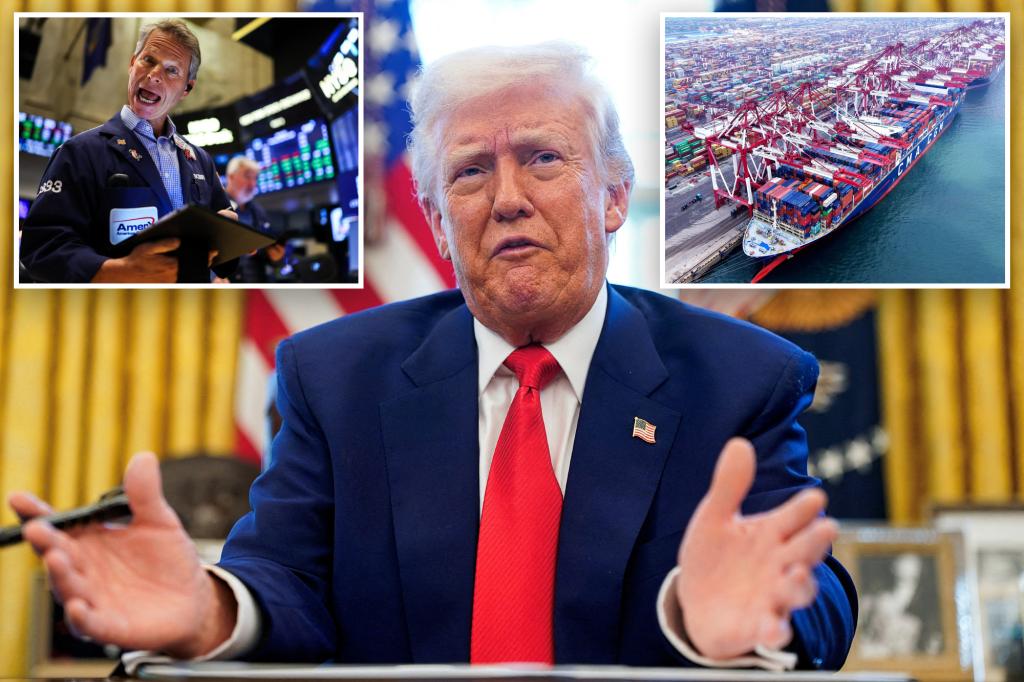
Trump’s Strategic Shift: The Unveiling of Tariff Tactics Against China
In a calculated move that has sent ripples through global markets, former President Donald Trump announced a temporary pause on most tariffs while simultaneously ramping up economic pressure on China. The decision, revealed during a campaign event in Detroit on Tuesday, marks a significant shift in trade strategy ahead of the 2024 election. Analysts suggest this dual approach aims to ease domestic inflation while maintaining a hardline stance against Beijing’s trade practices.
A Calculated Pause with Political Undertones
The surprise announcement suspends approximately $120 billion worth of tariffs on consumer goods—ranging from electronics to household items—while preserving targeted levies on Chinese steel, aluminum, and technology sectors. This selective relief comes as economic data shows:
- U.S. inflation hovering at 3.4% year-over-year
- Average tariff rates on Chinese imports remaining at 19%
- Bilateral trade deficits shrinking by 8% since 2023
“This isn’t a retreat—it’s a repositioning,” explains Georgetown University trade economist Dr. Lila Chen. “By lifting tariffs on everyday items, Trump addresses voter pain points while keeping strategic industries protected. It’s economic pragmatism wrapped in campaign messaging.”
The China Conundrum: Hardball Behind the Scenes
Despite the tariff pause, the Trump camp has quietly escalated pressure through three channels:
- Export controls: New restrictions on advanced semiconductor manufacturing equipment
- Investment bans: Expanded blacklist of Chinese tech firms
- Currency monitoring: Enhanced scrutiny of yuan valuation practices
Chinese Commerce Ministry spokesperson Wang Wenbin condemned the measures as “selective economic coercion,” vowing to “defend national interests through all necessary means.” Meanwhile, Treasury Secretary Janet Yellen warned that mixed signals could “destabilize fragile supply chains.”
Economic Impacts: Winners and Losers
Early market reactions reveal stark contrasts:
- Retail stocks surged 2.3% on tariff relief news
- Tech shares dipped 1.1% amid renewed China tensions
- Agricultural futures fluctuated as soybean exporters feared retaliation
“American consumers will see modest price drops on electronics and clothing by Q3,” predicts JP Morgan analyst Mark Richardson. “But manufacturers relying on Chinese components face renewed uncertainty—this isn’t the clean break businesses hoped for.”
Historical Context: Echoes of 2018 with New Twists
The current strategy mirrors Trump’s 2018-2019 tariff playbook but with crucial differences:
| Factor | 2018 Approach | 2024 Strategy |
|---|---|---|
| Tariff Scope | Blanket increases | Surgical adjustments |
| Alliances | Unilateral actions | Coordinated EU/Japan pressure |
| Tech Focus | Huawei sanctions | AI infrastructure bans |
Brookings Institution fellow Henry Wong notes: “The Biden administration’s chip war groundwork allowed Trump to escalate tech restrictions without starting from zero. This is tariff warfare 2.0—more precise but potentially more damaging.”
Global Reactions and Potential Fallout
International responses have been mixed:
- EU: Cautious optimism about coordinated China policy
- ASEAN: Concerns over supply chain disruptions
- Russia: State media framing the move as “American desperation”
Notably, Chinese state-owned enterprises have begun stockpiling rare earth minerals—a possible prelude to export restrictions. “We’re seeing textbook crisis preparation,” says former USTR negotiator Claire Bennett. “The question is whether Beijing will retaliate through trade channels or cyber warfare.”
What Comes Next: Election-Year Calculus
With seven months until the election, political analysts identify three likely scenarios:
- Short-term consumer relief boosts Trump’s economic credentials
- Tech sector pushback erodes Silicon Valley support
- Chinese retaliation becomes October surprise
As Federal Reserve Chair Jerome Powell prepares to testify before Congress next week, all eyes will be on whether this strategy achieves its dual aims: calming inflation without ceding ground on China. For businesses navigating these turbulent waters, the advice is clear—expect volatility and diversify supply chains.
Stay informed on evolving trade policies by subscribing to our geopolitical risk newsletter, delivering expert analysis straight to your inbox.
See more CCTV News Daily