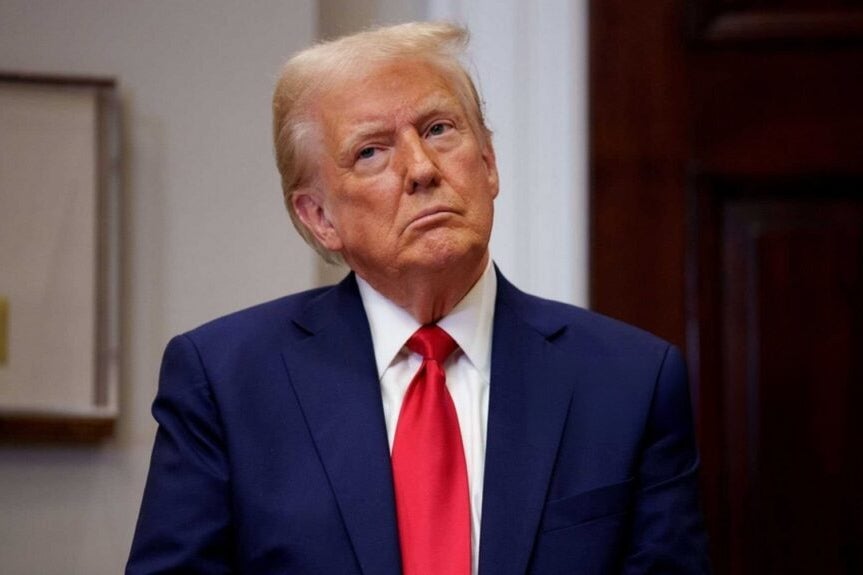
Trump’s Bold Tariff Strategy Targets $1.2 Trillion Trade Gap
Former President Donald Trump has unveiled an aggressive tariff strategy aimed at slashing America’s $1.2 trillion trade deficit, arguing that foreign nations must bear greater responsibility for accessing the U.S. market. The proposal, announced this week, would impose sweeping levies on imports while incentivizing domestic production. Critics warn of potential price hikes and trade wars, while supporters hail it as long-overdue economic rebalancing.
The Mechanics of the Proposed Tariff Plan
Trump’s plan centers on a 10% baseline tariff on all imports, with higher rates targeting specific sectors like automotive and electronics where trade imbalances are most acute. The policy would also penalize countries engaging in currency manipulation or intellectual property theft. According to Trump, “The era of unchecked access to American consumers is over—we’re putting our workers first.”
Data from the U.S. Census Bureau underscores the urgency: the trade deficit surged to $1.2 trillion in 2023, with China ($382 billion) and the EU ($217 billion) accounting for nearly half. Trump’s team claims tariffs could generate $500 billion annually, though economists dispute this figure. “Tariffs are taxes by another name,” says Dr. Evelyn Carter, a trade economist at the Brookings Institution. “Consumers and small businesses will foot the bill.”
Mixed Reactions from Industry and Allies
Domestic manufacturers largely applaud the move. “This levels the playing field,” argues James O’Connell of the Alliance for American Manufacturing. “For decades, foreign subsidies have undercut U.S. factories.” Conversely, retailers and agriculture groups fear retaliation. The U.S. Chamber of Commerce warns of “dangerous domino effects,” citing the 2018-2019 trade war that cost farmers $27 billion in lost exports.
- Supporters: Steel, tech, and labor unions highlight job creation potential.
- Opponents: Import-dependent industries and free-market advocates warn of inflation and supply chain disruptions.
Historical Precedents and Global Implications
Trump’s 2018 tariffs on steel (25%) and aluminum (10%) offer a case study. While steel employment rose by 3,200 jobs, a 2021 Federal Reserve study found broader losses of 75,000 manufacturing jobs due to retaliatory measures. This time, the scale is far larger. The Peterson Institute estimates a 10% universal tariff could reduce GDP by 0.5% annually.
Europe and China have already signaled defiance. “Unilateral actions violate WTO rules,” stated EU Trade Commissioner Valdis Dombrovskis. Meanwhile, Beijing threatened “proportionate countermeasures,” recalling its 2019 suspension of U.S. soybean purchases.
Economic Trade-Offs and the Inflation Factor
With U.S. inflation still above 3%, analysts debate whether tariffs would exacerbate price pressures. A 2023 Moody’s Analytics report suggests the plan could increase household costs by $1,700 per year. However, Trump’s advisors counter that reshoring production would eventually lower prices. “Short-term pain for long-term gain,” says economist Peter Navarro, a key architect of the strategy.
What’s Next for Trade Policy?
Implementation hinges on the 2024 election outcome. If enacted, the tariffs would likely face legal challenges and WTO disputes. Experts urge businesses to prepare for volatility. “Diversify supply chains now,” advises trade lawyer Rebecca Winters. “This isn’t just about tariffs—it’s a fundamental shift in U.S. economic policy.”
As debates rage, one thing is clear: Trump’s strategy marks a high-stakes gamble to redefine America’s role in global trade. Whether it bridges the deficit or widens economic fractures remains to be seen. For ongoing analysis, subscribe to our trade policy newsletter.
See more CCTV News Daily