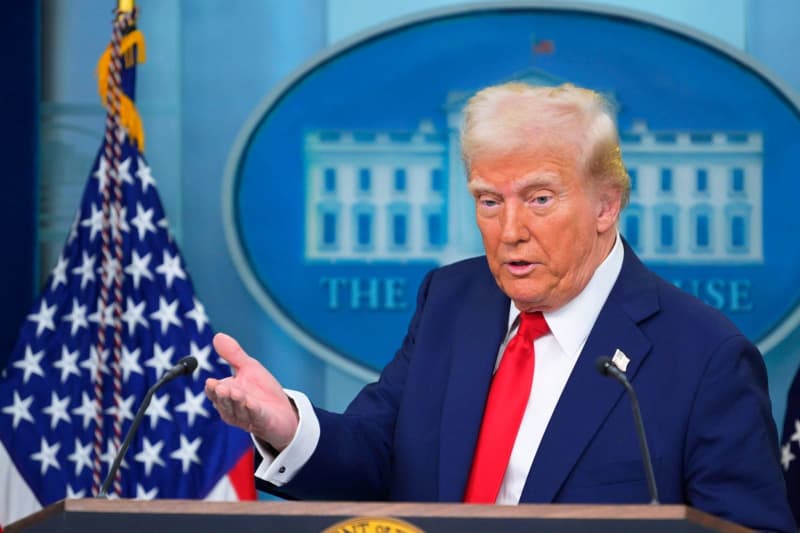
Trump’s Tariff Tactics: Understanding Trade Tensions with Canada, Mexico, and China
As the Trump administration rolled out its tariff strategies, the implications for international trade became increasingly profound. The economic relationships between the United States and its neighbors, Canada and Mexico, alongside its significant trading partner, China, were thrust into a new era of tension and uncertainty. This article delves into the potential economic fallout from Trump’s tariff tactics and the strategic motivations behind these controversial decisions.
Unpacking Trump’s Tariff Tactics
President Donald Trump’s approach to tariffs was characterized by a bold and often aggressive stance on trade. His administration enacted tariffs on various imports, claiming that they were necessary to protect American jobs and industries from unfair competition. The focus on Canada, Mexico, and China represented a multifaceted strategy aimed at reshaping trade dynamics.
At the heart of Trump’s tariff tactics was the desire to address what he viewed as long-standing trade imbalances. Critics often argued that these tariffs were not merely about protecting American interests but also served as a political tool to rally his base and assert a tough-on-trade image. This duality of motivation—economic protectionism coupled with political gain—created a complex landscape for international trade.
Trade Tensions with Canada
Canada, a close ally and significant trading partner, found itself at the center of Trump’s tariff initiatives. The imposition of tariffs on Canadian steel and aluminum in 2018 was met with swift retaliation. Canada responded by implementing tariffs on a range of U.S. goods, including bourbon, maple syrup, and various agricultural products. The back-and-forth escalated trade tensions and raised concerns about the future of the United States-Mexico-Canada Agreement (USMCA), which was designed to replace the North American Free Trade Agreement (NAFTA).
Trade experts noted that the tariffs on Canadian goods were particularly damaging to industries that relied heavily on cross-border supply chains. For instance, the auto industry, which involves a significant amount of trade between the U.S. and Canada, faced increased costs that could ultimately be passed on to consumers. The potential for job losses and increased prices for everyday goods became a pressing concern for many American households.
Implications for Mexico
Mexico, like Canada, was significantly impacted by Trump’s tariff tactics. The U.S. and Mexico share one of the world’s largest trading partnerships, and the imposition of tariffs threatened to disrupt this delicate balance. Trump frequently criticized Mexico for its trade practices, particularly concerning the auto industry and illegal immigration.
The introduction of tariffs on Mexican goods not only affected imports but also raised fears about the stability of the entire North American supply chain. Businesses that relied on materials and components from Mexico faced increased costs, which could lead to higher prices for consumers in the U.S.
Moreover, the tariffs fueled discussions around immigration and border security, with Trump often using trade as leverage to push for stricter immigration policies. This intertwining of trade and immigration policy added another layer of complexity to U.S.-Mexico relations.
China: The Trade War Escalates
Perhaps the most significant and contentious aspect of Trump’s tariff tactics was his approach to China. The U.S.-China trade relationship has been characterized by a complex web of interdependence, and Trump’s administration sought to recalibrate this balance. The tariffs imposed on Chinese goods—totaling hundreds of billions of dollars—were intended to target what Trump described as unfair trade practices, including intellectual property theft and currency manipulation.
The response from China was swift, with the country retaliating with its own tariffs on American products. This led to an all-out trade war that sent shockwaves through global markets. The implications of this trade war were far-reaching, affecting not only the economies of the U.S. and China but also global supply chains and international markets.
The Economic Fallout
As Trump’s tariffs took effect, the economic fallout became increasingly apparent. Economists began to voice concerns about the potential for a slowdown in economic growth, not just in the U.S. but globally. Higher tariffs often lead to increased costs for manufacturers, which can result in higher prices for consumers.
- Increased Costs: Manufacturers face higher input costs due to tariffs, which can lead to price increases for consumers.
- Job Losses: Industries reliant on exports may experience job losses as demand decreases.
- Market Uncertainty: Uncertainty surrounding trade policies can deter investment and affect stock markets.
The agricultural sector, in particular, faced significant challenges as tariffs constrained access to markets. American farmers who relied on exports to China and other countries found themselves grappling with decreased demand and lower prices, leading to a financial crisis for many.
Strategic Motivations Behind the Tariffs
Understanding the strategic motivations behind Trump’s tariff tactics requires a closer examination of his administration’s goals. A key aspect was the desire to revive American manufacturing, particularly in industries that had been outsourcing jobs overseas. By imposing tariffs, the administration aimed to incentivize companies to keep production within the U.S. borders.
Additionally, Trump’s tariffs were part of a broader narrative of “America First,” which resonated with many voters who felt left behind by globalization. This approach appealed to a segment of the population that believed their jobs and livelihoods were threatened by foreign competition.
However, the long-term effectiveness of these tactics remains a topic of debate among economists. While some argue that tariffs can protect American jobs in the short term, others caution that they may lead to retaliatory measures and disrupt global trade flows.
Future Outlook and Conclusion
As the world continues to grapple with the repercussions of Trump’s tariff tactics, the future of international trade hangs in the balance. The relationships between the U.S., Canada, Mexico, and China are likely to evolve as nations seek to navigate the complexities of a post-tariff landscape. The lessons learned from this period may shape trade policies for years to come.
In summary, Trump’s approach to tariffs has had far-reaching implications for international trade, particularly with Canada, Mexico, and China. As the global economy continues to adapt, it is essential to consider both the short-term impacts and the long-term consequences of these policies. The landscape of international trade is ever-changing, and the strategic motivations behind these decisions will ultimately guide the path forward.
See more CCTV News Daily