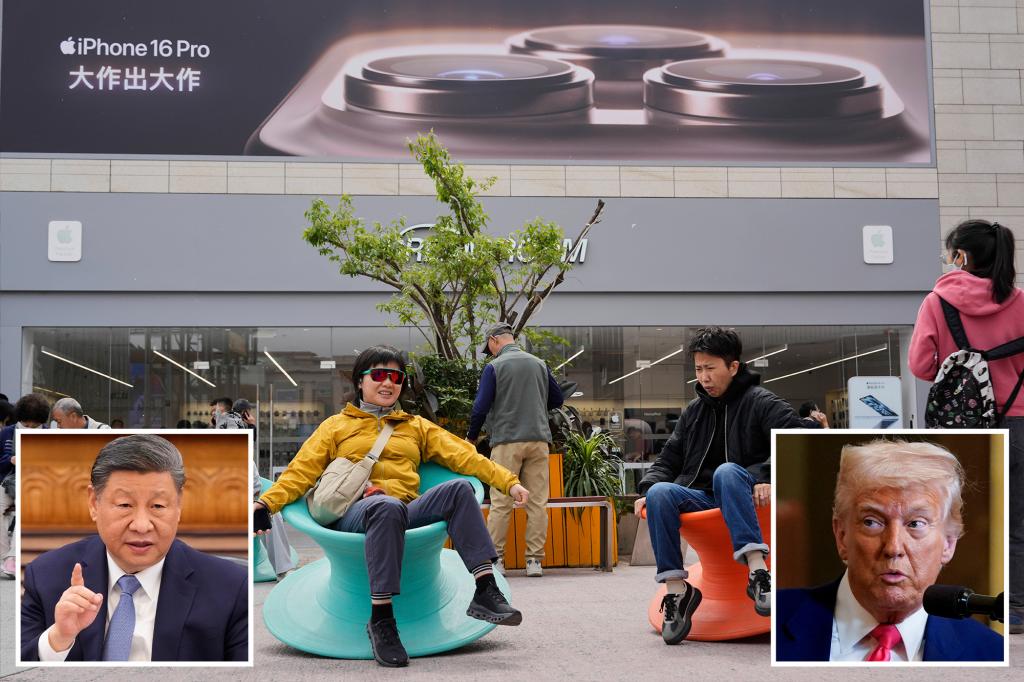
Trump’s Bold Tariff Strategy: The Impact of a 104% Levy on China
Former President Donald Trump’s aggressive trade policy has escalated with the implementation of a 104% tariff on select Chinese imports, effective immediately. This unprecedented move, announced amid rising geopolitical tensions, aims to protect U.S. industries and reduce reliance on Chinese manufacturing. Economists warn the decision could trigger a trade war, disrupt global supply chains, and inflate consumer prices worldwide.
The Rationale Behind the 104% Tariff
The Trump administration has framed the tariff as a necessary measure to counter China’s alleged unfair trade practices, including intellectual property theft and state subsidies. “For decades, China has exploited the U.S. economy,” Trump stated in a recent press briefing. “This tariff levels the playing field and brings jobs back to America.” The levy targets key sectors such as:
- Electric vehicles (EVs) and automotive parts
- Semiconductors and advanced electronics
- Renewable energy equipment, including solar panels
- Steel and aluminum products
Data from the U.S. Trade Representative shows China exported $427 billion worth of goods to the U.S. in 2023, making it the largest source of imports. The new tariff could slash this figure by an estimated 40%, according to analysts at the Peterson Institute for International Economics.
Global Economic Repercussions
Experts are divided on the long-term effects of the policy. Dr. Linda Chen, a senior fellow at the Brookings Institution, warns, “This isn’t just a U.S.-China issue—it’s a shockwave for the global economy. Emerging markets dependent on Chinese manufacturing will face collateral damage.” Meanwhile, proponents argue the tariff could revitalize domestic production. “Short-term pain is inevitable, but reshoring critical industries strengthens national security,” says economist Mark Richardson of the Heritage Foundation.
Early market reactions have been volatile:
- The Dow Jones Industrial Average dropped 2.3% following the announcement
- Chinese yuan fell to a six-month low against the dollar
- Commodity prices for lithium and rare earth metals surged 8%
China’s Likely Countermeasures
Beijing has vowed to retaliate, with the Commerce Ministry calling the tariff “a violation of WTO principles.” Historical patterns suggest possible responses include:
- Targeted tariffs on U.S. agricultural exports (soybeans, pork)
- Restrictions on rare earth mineral exports critical for tech manufacturing
- Accelerated divestment from U.S. Treasury bonds
During the 2018-2019 trade war, China’s retaliatory tariffs cost U.S. farmers $11 billion in lost revenue. The current escalation could double that impact, warns the American Farm Bureau Federation.
Sector-Specific Consequences
Automotive Industry: EV manufacturers like Tesla and Rivian face immediate parts shortages, with 30% of components currently sourced from China. “Production delays are inevitable,” said AutoAnalytics CEO David Park. “Consumers will see price hikes within months.”
Technology Sector: Semiconductor companies reliant on Chinese rare earth metals are exploring alternatives in Australia and Vietnam. However, industry analysts note establishing new supply chains could take 3-5 years.
Renewable Energy: Solar panel installations may slow as prices jump 25%. This contradicts the Biden administration’s climate goals, creating policy whiplash for energy companies.
The Geopolitical Calculus
Beyond economics, the tariff reflects deteriorating U.S.-China relations. Recent developments include:
- Ongoing disputes over Taiwan and South China Sea territories
- Competition in AI and quantum computing development
- Conflicting approaches to Russia’s war in Ukraine
“This is economic statecraft at its most confrontational,” observes Georgetown University professor Carla Hills, a former U.S. Trade Representative. “The risk of miscalculation is higher than during the Cold War.”
What Comes Next?
Potential scenarios include:
- Negotiated Settlement: Behind-the-scenes talks could produce exemptions for certain industries
- Prolonged Trade War: Escalation might lead to broader decoupling of the world’s two largest economies
- WTO Challenge: China will likely file a formal complaint, though the process could take years
Consumers should prepare for higher prices on electronics, appliances, and construction materials. Businesses are advised to audit supply chains and explore alternative suppliers. For ongoing coverage of this developing story, subscribe to our trade policy newsletter.
As the situation evolves, one truth becomes clear: the rules of global trade are being rewritten in real time, with consequences that will echo for generations. Whether this bold strategy protects American interests or backfires spectacularly remains to be seen.
See more CCTV News Daily