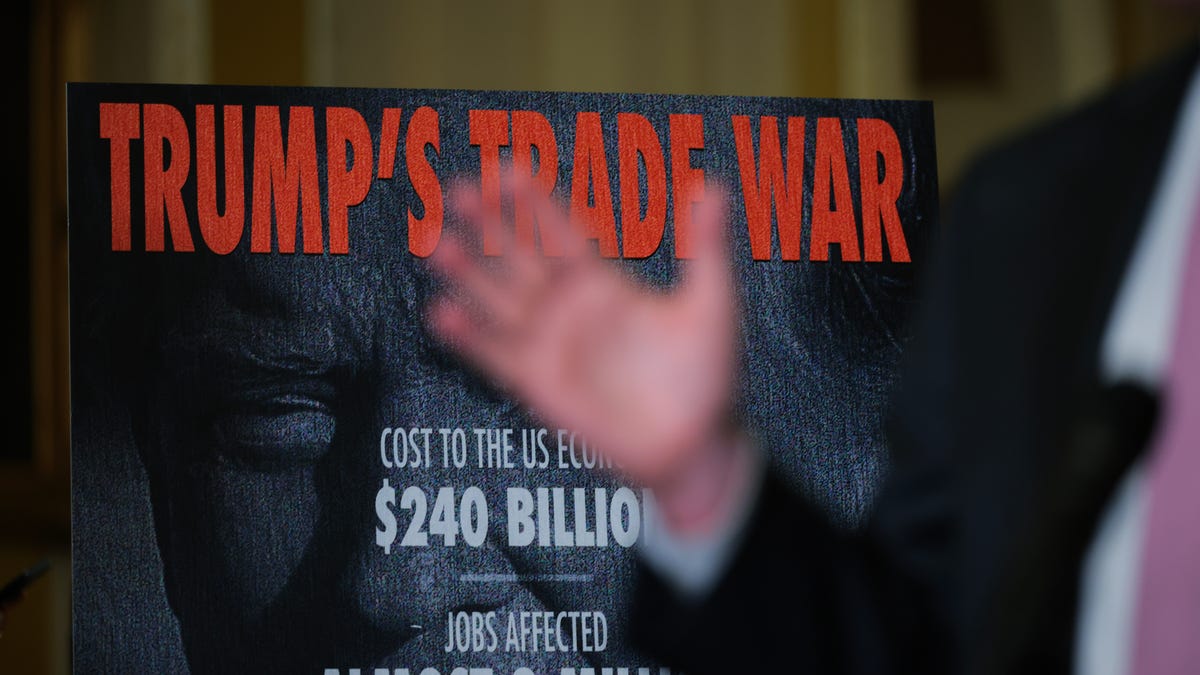
Former President Donald Trump’s proposed tariffs on imported goods could trigger significant disruptions across corporate America, with economists warning of squeezed profit margins, retaliatory trade measures, and inflationary pressures. As the 2024 election looms, businesses brace for potential turbulence in earnings, particularly in manufacturing, automotive, and consumer goods sectors. Analysts project these tariffs—ranging from 10% to 60%—may reshape supply chains and consumer prices within months of implementation.
The Economic Mechanics Behind the Tariff Strategy
Trump’s tariff blueprint, unveiled during campaign rallies, targets over $3 trillion in annual imports from China, Mexico, and the European Union. The Peterson Institute for International Economics estimates such measures could:
- Reduce U.S. GDP by 0.5% annually
- Eliminate 500,000 manufacturing jobs
- Increase average household costs by $1,700 per year
“This isn’t just a trade policy—it’s an economic earthquake,” remarks Dr. Linda Yang, senior fellow at the Brookings Institution. “While some domestic producers may benefit short-term, the downstream effects on input costs will ripple through earnings reports by Q4 2024.”
Sectors Most Vulnerable to Earnings Shocks
The automotive industry faces existential challenges, with proposed 25% tariffs on foreign vehicles potentially raising production costs by $18 billion annually. Meanwhile, consumer electronics companies relying on Chinese components could see gross margins contract by 3-5 percentage points.
Energy markets aren’t immune either. A 10% tariff on imported crude oil—a first in U.S. history—might boost domestic producers but could spike refinery costs by 15%, according to Rystad Energy data. “Refiners will face an impossible choice: absorb the costs or pass them to consumers already battling inflation,” notes energy analyst Mark Richardson.
The Global Retaliation Risk Factor
Historical precedent suggests trading partners won’t take these measures lying down. When the Trump administration imposed steel tariffs in 2018, the EU responded with $3.2 billion in counter-tariffs on American motorcycles, bourbon, and jeans. This time, China has already drafted retaliatory measures targeting U.S. agricultural exports and Boeing aircraft.
Trade attorney Jessica Morales warns: “We’re looking at a potential $150 billion trade war that could erase the export gains U.S. farmers and aerospace companies made post-pandemic.”
Corporate Defense Strategies Taking Shape
Forward-thinking companies are deploying three main tactics:
- Supply chain diversification: Shifting production to Vietnam, India, and other non-targeted countries
- Preemptive pricing: Locking in long-term contracts before tariffs take effect
- Lobbying efforts: The Business Roundtable has already budgeted $40 million for congressional outreach
However, small and mid-sized enterprises (SMEs) lack such resources. “Main Street businesses will bear the brunt,” observes National Retail Federation CEO Matthew Shay. “When import costs rise 10% overnight, many simply can’t adapt quickly enough.”
Investor Reactions and Market Implications
The S&P 500’s import-dependent sectors have underperformed the index by 8% since tariff talks intensified in March. Bond markets tell a similar story—the yield curve inverted further as investors priced in slower economic growth.
Yet some see opportunity. “Defensive stocks like utilities and domestic-focused consumer staples may become safe havens,” suggests BlackRock chief investment strategist Wei Chen. “Investors should prepare for increased earnings volatility through 2025.”
The Road Ahead: Policy Uncertainty and Preparation
With legal challenges likely and congressional midterms potentially reshaping the political landscape, businesses face unprecedented uncertainty. Many are running stress tests modeling 15%, 25%, and worst-case 60% tariff scenarios.
As the situation develops, corporate leaders must balance short-term survival with long-term strategy. Those who diversify supply chains now, renegotiate supplier contracts, and engage policymakers may weather the storm—while others risk being swept away by forces beyond their control.
For ongoing coverage of tariff impacts across industries, subscribe to our daily policy briefing or attend our June 12 webinar featuring former U.S. Trade Representative Robert Lighthizer.
See more CCTV News Daily