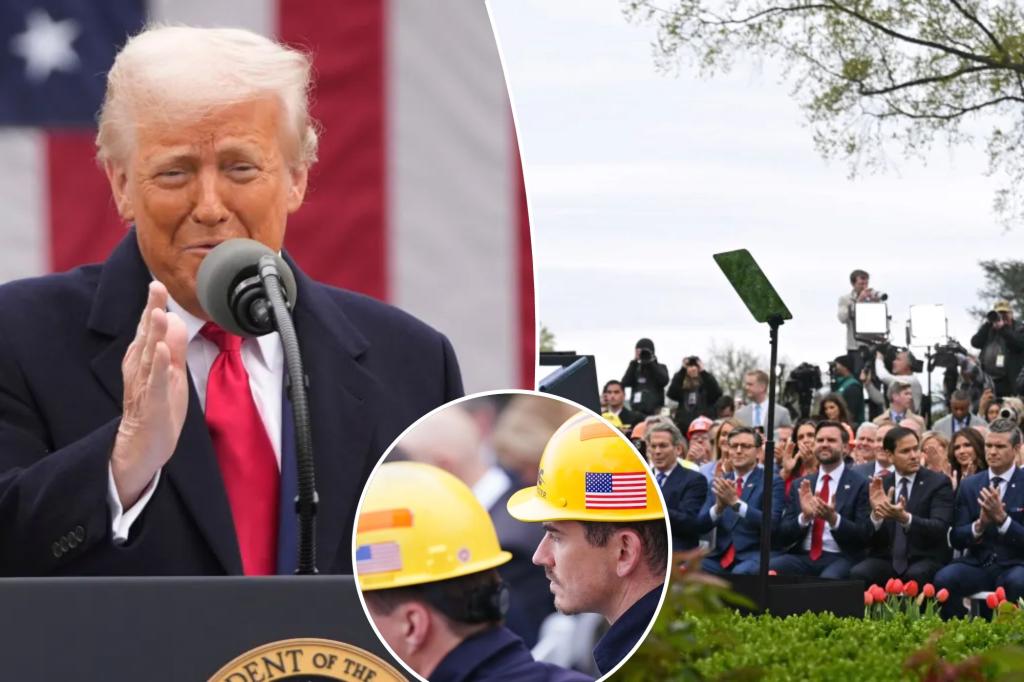
Trump’s Bold Move: A 10% Tariff on All Imports Signals Economic Independence
Former President Donald Trump has announced a sweeping 10% tariff on all imports, a policy he claims will bolster U.S. economic independence. The proposal, unveiled during a campaign rally in Detroit, marks a dramatic escalation of his long-standing protectionist stance. Economists warn the move could trigger trade wars, while supporters argue it will revive domestic manufacturing. The plan, if implemented, would take effect in 2025.
The Rationale Behind Trump’s Tariff Strategy
Trump framed the tariff as a cornerstone of his economic agenda, asserting it would protect American jobs and reduce reliance on foreign goods. “This is about putting America first,” he declared. “We’ve been exploited for decades, and this 10% tariff is just the beginning.” The proposal mirrors his 2018-2019 trade policies, which imposed tariffs on $370 billion of Chinese imports.
Data from the U.S. International Trade Commission shows tariffs under Trump’s first term raised approximately $80 billion in revenue. However, a 2021 Peterson Institute for International Economics study found those tariffs cost U.S. consumers $51 billion annually. “History suggests broad tariffs function as hidden taxes,” said Dr. Evelyn Carter, a trade economist at Harvard. “They often lead to higher prices without meaningful job gains.”
Potential Impacts on the U.S. Economy
The proposed 10% blanket tariff could have far-reaching consequences:
- Consumer Prices: The Tax Foundation estimates a 2-3% increase in household expenses, disproportionately affecting low-income families.
- Manufacturing: While some sectors like steel may benefit, industries reliant on imported components (e.g., electronics, autos) face higher production costs.
- Trade Relations: The EU and China have already signaled potential retaliation, threatening $200 billion in U.S. exports.
Proponents counter that tariffs could narrow the U.S. trade deficit, which reached $948 billion in 2022. “Strategic tariffs force trading partners to the negotiating table,” argued former U.S. Trade Representative Robert Lighthizer in a recent op-ed.
Global Reactions and Historical Precedents
International leaders have condemned the proposal. German Chancellor Olaf Scholz called it “a recipe for stagflation,” while China’s Commerce Ministry warned of “necessary countermeasures.” The announcement has also reignited debates about the effectiveness of protectionism.
Historical examples offer mixed lessons:
- The 1930 Smoot-Hawley Tariff exacerbated the Great Depression, shrinking global trade by 66%.
- Japan’s post-war industrial policy combined tariffs with strategic investments, building global automotive dominance.
“Blanket tariffs lack precision,” noted MIT economist David Autor. “Targeted measures with domestic reinvestment, like the CHIPS Act, yield better results.”
Political Implications and the Road Ahead
The tariff announcement solidifies Trump’s economic nationalism ahead of the 2024 election. Polls show 52% of Republican voters support increased tariffs, versus just 31% of Democrats. “This is a clear dividing line between the candidates,” said political analyst Mara Liasson.
If enacted, the policy would require Congressional approval—a hurdle given likely Democratic opposition. However, Trump could leverage executive authority under Section 232 of the Trade Expansion Act, as he did for steel tariffs in 2018.
Market reactions have been cautious. The S&P 500 dipped 0.8% following the news, while Treasury yields rose. “Investors remember the volatility of 2018-2019,” explained JPMorgan’s chief strategist Marko Kolanovic.
What Comes Next for U.S. Trade Policy?
The proposal sets the stage for a contentious policy battle with four potential outcomes:
- Full Implementation: Could spark inflation but may reduce trade deficits
- Negotiated Compromise: Sector-specific tariffs with exemptions
- Legal Challenges: WTO disputes or domestic court cases
- Retaliatory Spiral: Global trade contraction
As the debate intensifies, businesses are advised to scenario-plan for supply chain disruptions. “Companies learned from last time to diversify sourcing,” noted supply chain expert Reshma Patel. “Those preparations will now be tested.”
For voters weighing this proposal, the fundamental question remains: Will protectionism deliver prosperity, or will it unravel decades of economic integration? The answer may define America’s economic trajectory for years to come. Follow our ongoing coverage for expert analysis of how this policy develops.
See more CCTV News Daily