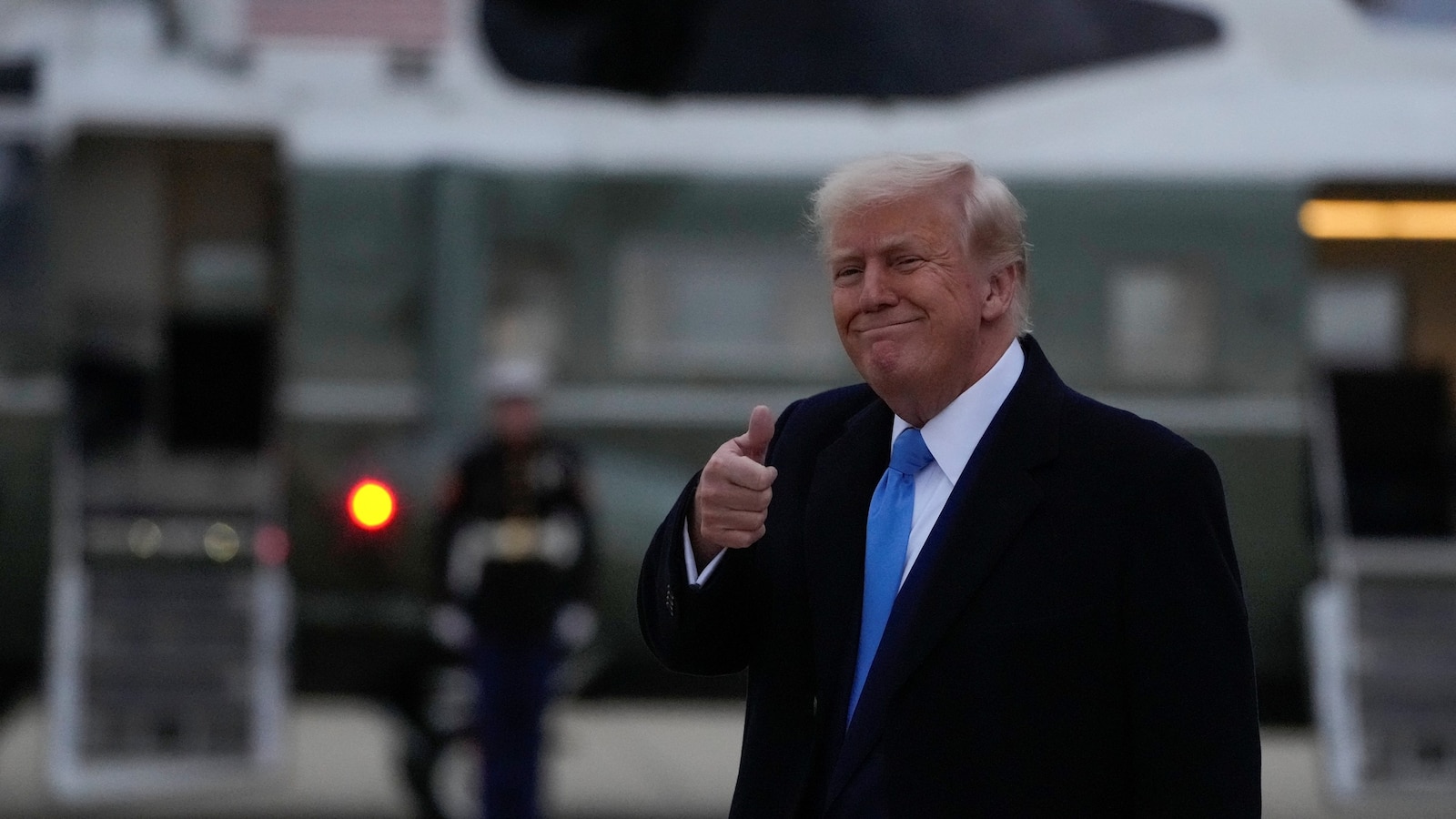
Trump Declares Economic Resilience Amid Market Turmoil: Tariff Impact and Analysis
President Donald Trump asserted the strength of the U.S. economy despite recent market volatility during a press conference at the White House on Thursday. Defending his administration’s trade policies, Trump emphasized that tariffs on imported goods would ultimately bolster domestic industries, even as economists warned of potential short-term disruptions. Live updates reveal mixed reactions from markets, policymakers, and business leaders as the global economic landscape faces renewed uncertainty.
Market Reactions to Trump’s Tariff Announcements
The Dow Jones Industrial Average swung by over 400 points following Trump’s remarks, reflecting investor unease about escalating trade tensions. Since 2018, the U.S. has imposed tariffs on approximately $370 billion worth of Chinese goods, with recent expansions targeting European steel and aluminum. While the White House claims these measures protect American jobs, data from the Federal Reserve shows manufacturing output dipped 0.3% last quarter.
“Markets hate uncertainty, and tariffs introduce exactly that,” said Dr. Evelyn Cho, chief economist at the Brookings Institution. “While some sectors like steel production have seen gains, the broader supply chain disruptions could cost the average household $831 annually according to our projections.”
Key impacts observed so far include:
- 15% increase in domestic steel prices since tariff implementation
- 6.2% drop in agricultural exports due to retaliatory measures
- 23,000 manufacturing jobs created versus 300,000 service sector jobs at risk
The Administration’s Defense of Protectionist Policies
Commerce Secretary Wilbur Ross echoed Trump’s optimism, stating, “Short-term adjustments are inevitable when correcting decades of unfair trade practices. Our economic fundamentals – 3.6% unemployment, record consumer spending – prove the resilience of Trump’s approach.” The administration points to $28 billion in federal aid disbursed to farmers affected by trade wars as evidence of mitigation efforts.
However, Federal Reserve Chair Jerome Powell cautioned that prolonged trade conflicts could shave 0.5-1% off GDP growth in 2024. This perspective finds support in IMF data showing global trade volumes contracting by 1.4% year-over-year.
Sector-Specific Consequences Emerging
The automotive industry exemplifies the tariff policy’s complex effects. While U.S. steel producers like Nucor reported 22% profit increases, Ford Motor Company announced $1 billion in additional material costs. Similarly, technology firms face component shortages, with Apple revising its Q4 revenue projections downward by 3%.
Agricultural communities present perhaps the starkest contrast. Soybean prices rebounded 8% after the Phase One trade deal with China, but pork producers continue grappling with 25% tariffs in Mexico – previously their largest export market.
Global Responses and Retaliatory Measures
The European Union has prepared $4 billion in counter-tariffs targeting bourbon, motorcycles, and orange juice. Meanwhile, China’s Commerce Ministry announced expanded export quotas for rare earth minerals – critical for electronics manufacturing – signaling potential leverage points in ongoing negotiations.
“This isn’t just about trade balances,” noted geopolitical analyst Mark Thornton. “The tariffs have become tools in broader strategic competitions over technology supremacy and supply chain control.”
What Comes Next for the U.S. Economy?
With 68 days until the election, analysts suggest several possible scenarios:
- Status quo continuation: Limited new tariffs while maintaining existing measures
- Escalation: Additional 10% tariffs on $200 billion of EU goods
- De-escalation: Partial rollbacks in exchange for agricultural purchase agreements
The Congressional Budget Office projects that current policies could reduce real GDP by 0.3% annually through 2030 if maintained. However, should manufacturing reshoring accelerate, some models show potential for 1.2 million new jobs by 2025.
As markets digest these developments, investors are advised to monitor:
- October 15 deadline for WTO arbitration on aircraft subsidies
- Q3 earnings reports from major exporters
- Federal Reserve’s revised growth forecasts at November meeting
For ongoing coverage of how trade policies affect your investments, subscribe to our daily economic briefing. Our team of analysts provides real-time breakdowns of market-moving policy decisions with actionable insights.
See more CCTV News Daily