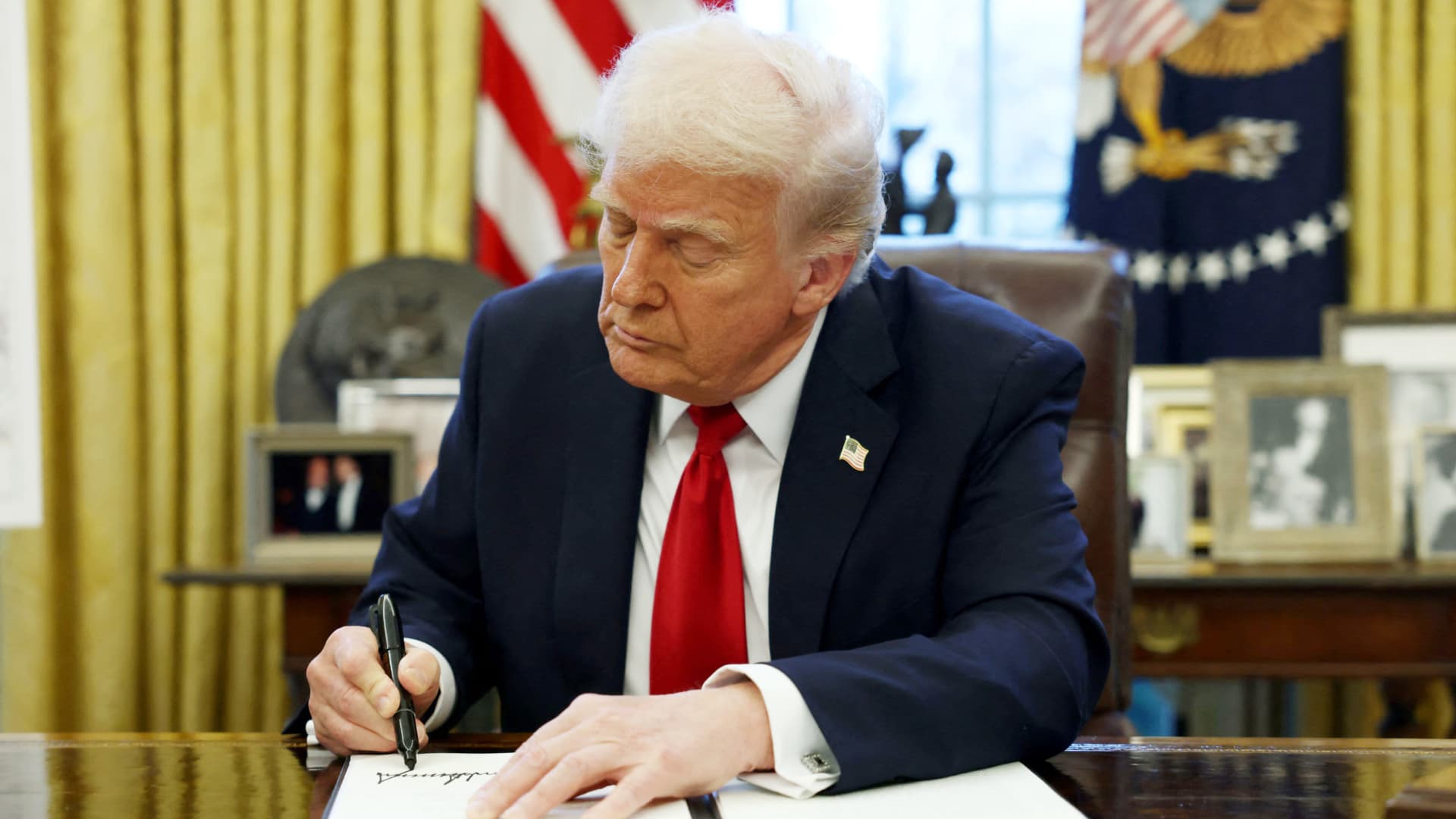
Trump Issues Stark Warning: ‘Larger’ Tariffs Loom if EU and Canada Team Up Against U.S.
In a recent statement that has sent shockwaves through international trade circles, President Donald Trump has issued a stark warning regarding the potential for significantly larger tariffs if the European Union (EU) and Canada decide to collaborate against U.S. economic interests. This development raises critical questions about the future of transatlantic trade relations, the stability of global markets, and the broader implications for international economic policy.
The Context of Trump’s Warning
President Trump’s administration has been characterized by a focus on “America First” policies, emphasizing the need to protect U.S. industries from what he perceives as unfair trade practices. The warning comes amid increasing tensions between the U.S., the EU, and Canada over various trade disputes, including tariffs on steel and aluminum, agricultural products, and technology.
Trump’s comments were particularly directed at the notion of a united front between Canada and the EU against U.S. economic interests. He suggested that if these two entities were to join forces, the U.S. would respond with tariffs that could be “larger” than those previously imposed. This rhetoric indicates a readiness to escalate trade conflicts, which could have far-reaching consequences for all parties involved.
The Potential Impact of Higher Tariffs
The imposition of larger tariffs could have significant implications for both the U.S. economy and its trading partners. Here’s what’s at stake:
- Increased Costs for Consumers: Higher tariffs often lead to increased prices for imported goods. Consumers may face higher costs on everyday items, from electronics to clothing, as businesses pass on the increased expenses.
- Supply Chain Disruptions: Many industries rely on cross-border supply chains. Tariffs can disrupt these networks, leading to delays and increased costs for manufacturers.
- Retaliation from Allies: Canada and the EU may respond with their own tariffs on U.S. goods, leading to a tit-for-tat escalation that could hurt American exporters.
- Impact on Global Markets: Uncertainty surrounding trade relations can lead to volatility in global markets, affecting investments and economic stability worldwide.
Historical Context: Trade Wars and Their Consequences
To understand the implications of Trump’s warning, it’s essential to look at the historical context of trade wars. The U.S. has previously engaged in trade disputes that have led to significant economic repercussions. For instance, the trade war with China initiated in 2018 saw tariffs imposed on billions of dollars worth of goods, leading to retaliation and a slowdown in global trade.
Historically, trade wars can lead to:
- Economic Slowdowns: Countries involved in trade wars often experience reduced economic growth. Businesses may hesitate to invest due to uncertainty, leading to job losses and reduced consumer spending.
- Consumer Backlash: As prices rise due to tariffs, consumers can push back, leading to changes in purchasing behavior and increased support for alternative products or sources.
The Role of the EU and Canada in Global Trade
The EU and Canada play significant roles in the global trading system. Both have strong economies and are major trading partners for the United States. Their collaboration against perceived U.S. economic aggression could unify their stances on various issues, including environmental standards, labor rights, and digital trade.
Should the EU and Canada decide to align more closely in response to U.S. tariffs, it could signal a shift toward a more multilateral approach to trade. This would potentially encourage other nations to join in, creating a broader coalition that seeks to counterbalance U.S. economic influence.
Looking Ahead: Potential Scenarios
The future of trade relations between the U.S., EU, and Canada is uncertain. Several scenarios could unfold:
- Negotiation and Compromise: Diplomatic efforts could lead to negotiations that ease tensions and avoid the imposition of larger tariffs. This scenario would benefit all parties by fostering a more stable trade environment.
- Escalation of Tariffs: If negotiations fail, we could see a rapid escalation of tariffs, leading to widespread economic repercussions and potential recessionary pressures.
- Shift Toward New Trade Alliances: Countries may look to form new trade alliances outside of traditional frameworks, seeking to reduce dependence on U.S. markets.
Conclusion: The Importance of Strategic Trade Relations
President Trump’s warning of larger tariffs if the EU and Canada team up against U.S. economic interests underscores the fragile nature of international trade relationships. The potential consequences of such a scenario are vast, impacting not just the U.S., but global economies as well.
As we move forward, it’s crucial for all parties to consider the long-term implications of their trade policies. Cooperation and dialogue may be necessary to avoid a trade war that could have lasting negative effects on economic growth and stability. Ultimately, a balanced approach that respects the interests of all involved will be key to fostering a robust and resilient global trading environment.
In navigating these complex waters, leaders in the U.S., EU, and Canada must prioritize strategic trade relations that promote mutual benefit over short-term gains. Only through collaboration can we hope to achieve a stable and prosperous economic future for all nations involved.
See more CCTV News Daily