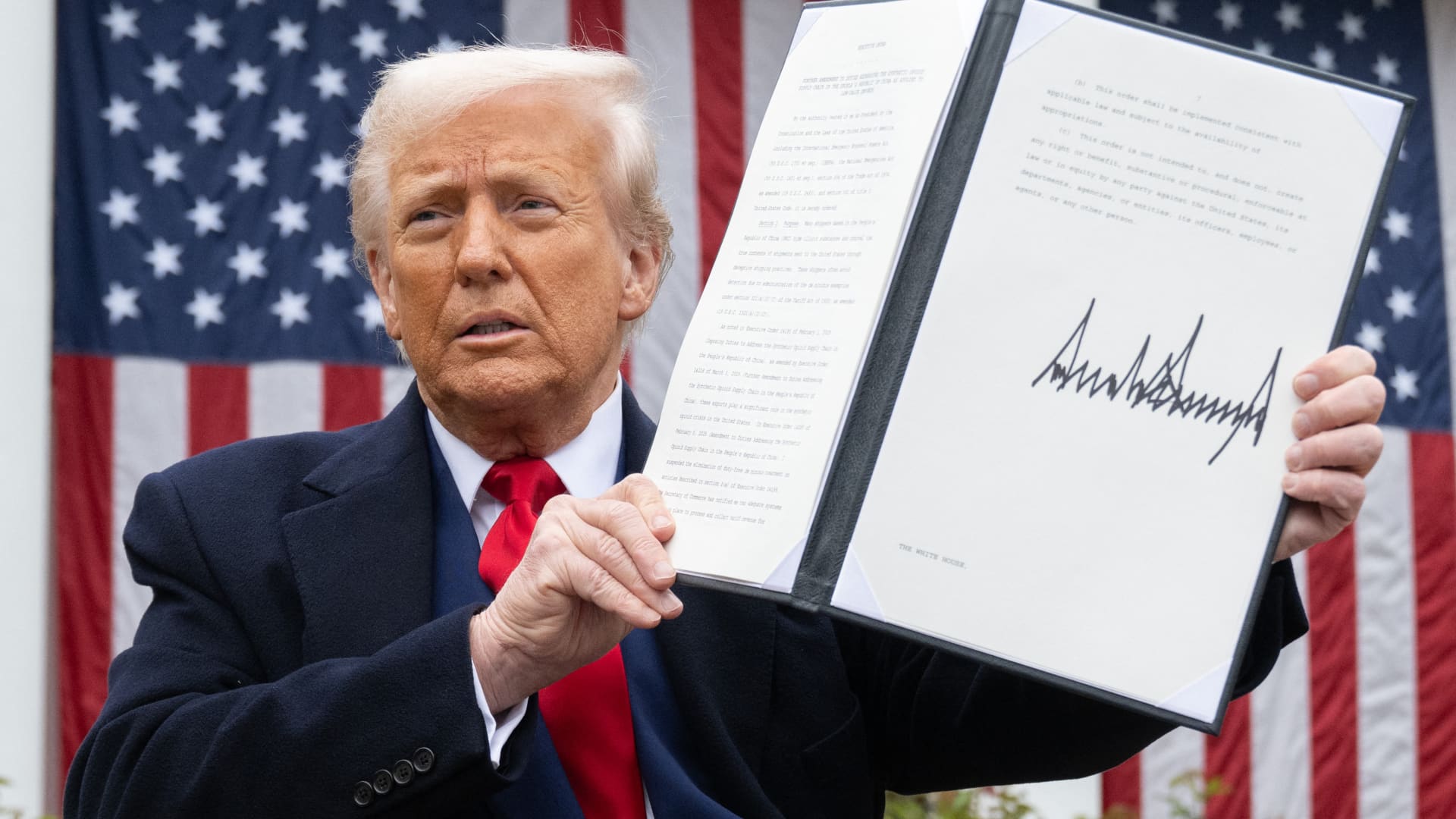
The High-Stakes Gamble: Will Trump’s Tariff Strategy Pass the Ultimate Test?
As former President Donald Trump’s tariff policies face their first major test, economists and policymakers are divided over whether the aggressive trade measures will bolster the U.S. economy or trigger a damaging chain reaction. With new tariffs targeting $300 billion in Chinese goods and potential expansions to European imports, the strategy risks inflation, trade wars, and global supply chain disruptions—all while testing the resilience of American consumers and businesses.
The Tariff Blueprint: Protectionism or Provocation?
Trump’s latest tariff proposal, announced last month, would impose 60% or higher duties on Chinese imports—tripling current rates—while adding 10% across-the-board tariffs for all other trading partners. The move comes as the Biden administration maintains most existing Trump-era tariffs, creating an unusual bipartisan continuity in trade policy despite stark ideological differences.
“This isn’t just tough negotiation—it’s economic brinksmanship,” warns Dr. Linda Yang, senior fellow at the Peterson Institute for International Economics. “Our models suggest these tariffs could cost the average American household $1,700 annually in higher prices while potentially triggering 900,000 job losses in import-dependent sectors.”
Proponents counter that the hardline approach has already yielded results:
- U.S. manufacturing jobs grew by 483,000 during Trump’s first term
- Trade deficit with China narrowed by $80 billion from 2018-2020
- 65% of reshored companies cited tariffs as a key factor in relocation decisions
Global Repercussions and Retaliatory Risks
European Commission trade data reveals preparations for $4 billion in counter-tariffs targeting American whiskey, motorcycles, and agricultural products. China has historically matched U.S. tariffs dollar-for-dollar, with its 2023 retaliatory measures affecting $185 billion in American exports.
“We’re seeing the early stages of a domino effect,” notes former USTR negotiator Robert Holtz. “When Germany’s auto industry suffers from U.S. steel tariffs, they pressure Brussels to respond. Then Wisconsin farmers get hit, which creates political pressure here. It becomes a self-perpetuating cycle.”
Emerging markets present additional complications. Vietnam and Mexico have seen export surges as companies reroute supply chains—only to now face proposed U.S. tariffs of 10-25% on their products.
The Inflation Equation
Federal Reserve data shows tariff-related costs contributed 0.3-0.7 percentage points to inflation during the 2018-2019 trade war. With current inflation at 3.4%, economists debate whether new tariffs could:
- Add 1.2% to CPI within 18 months (Morgan Stanley projection)
- Reduce GDP growth by 0.5% annually (IMF estimate)
- Increase domestic production costs by 8-15% (National Association of Manufacturers)
“Tariffs function like a regressive tax,” argues Columbia Business School professor Adam Parker. “Our research shows low-income households spend 50% more of their income on tariff-affected goods than high-earners. That Walmart shopper pays the price, not the multinational corporation.”
Political Calculus and Electoral Consequences
With 68% of swing-state voters listing the economy as their top concern, both campaigns are framing tariffs through an electoral lens. Trump allies highlight polling showing 52% of Americans support tougher trade measures against China, while Democrats emphasize that 61% prefer multilateral approaches over unilateral tariffs.
“The Midwest will be the ultimate testing ground,” says political strategist Maria Gonzales. “If soybean prices drop due to Chinese retaliation while manufacturing jobs increase, which narrative resonates more? That’s the gamble.”
What Comes Next?
The Commerce Department will finalize tariff rules by August, with implementation possible as early as October. Legal challenges from affected industries are certain, while WTO dispute proceedings—largely sidelined during the first Trump administration—could create additional complications.
Key developments to watch:
- September Fed meeting (potential inflation response)
- October G20 summit (last-ditch negotiation window)
- Q3 earnings reports (early corporate impact assessments)
As the world watches this high-stakes economic experiment unfold, businesses and consumers alike should prepare for potential turbulence. For those seeking to understand how these policies might affect specific industries, subscribe to our trade policy newsletter for ongoing analysis and expert commentary.
See more CCTV News Daily