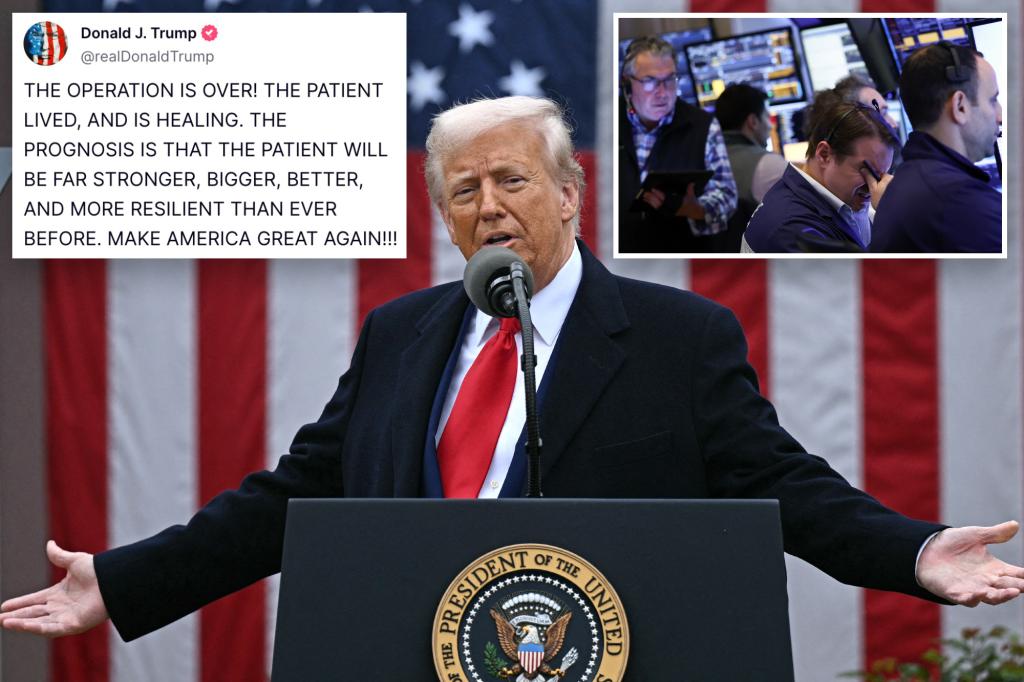
Trump Claims Tariffs Will Fortify US Economy Amid Market Turmoil: Is It True?
Former President Donald Trump has reignited debate over trade policy by asserting that sweeping tariffs on foreign goods will strengthen the U.S. economy during a period of market volatility. Speaking at a campaign rally in Michigan on Tuesday, Trump framed tariffs as a protective shield for American industries, despite warnings from economists about potential price hikes and trade wars. The proposal comes as inflation remains stubbornly high and global supply chains face renewed pressures.
The Case for Tariffs: Protectionism or Economic Stimulus?
Trump’s latest tariff push builds on his first-term policies, which saw levies imposed on $380 billion worth of Chinese imports and steel/aluminum from multiple nations. He now proposes a 10% across-the-board tariff on all foreign imports, arguing it would:
- Bring back manufacturing jobs
- Reduce reliance on geopolitical rivals
- Generate federal revenue to offset tax cuts
“When you tax foreign cheaters, you create American jobs,” Trump told supporters, claiming his previous tariffs generated “$50 billion annually” for U.S. coffers. However, U.S. Treasury data shows tariff revenue peaked at $79 billion in 2021 while costing consumers $51 billion annually according to a National Bureau of Economic Research study.
Economic Backlash: What Critics Say
Trade experts warn the approach could backfire. “Tariffs function like a sales tax on consumers,” said Dr. Linda Chen, senior fellow at the Peterson Institute for International Economics. “Our 2023 analysis shows every $1 in tariff revenue costs the economy $1.20 in lost efficiency and higher prices.”
Key concerns include:
- Projected 2-4% increase in consumer prices (Brookings Institution)
- Retaliation from trade partners threatening $150B in U.S. exports
- Supply chain disruptions for auto and tech sectors
Historical precedent raises red flags. The U.S. Chamber of Commerce notes that Trump’s 2018 steel tariffs saved 8,700 metal jobs but cost 75,000 positions in downstream industries. Meanwhile, China’s retaliatory tariffs devastated American soybean farmers, requiring a $28 billion bailout.
Market Reactions and Sector-Specific Impacts
Financial markets have shown nervousness about renewed trade wars. The S&P 500 fell 1.2% following Trump’s remarks, with industrial and tech stocks bearing the brunt. “Investors remember 2019’s manufacturing recession that followed tariff escalations,” noted Goldman Sachs analyst Mark Richardson.
Sectors facing disproportionate risk:
- Automotive: Potential 5% price hike on vehicles (Center for Automotive Research)
- Electronics: 90% of smartphones and laptops are imported
- Agriculture: Export-dependent industries vulnerable to retaliation
Political Divide on Trade Policy
The tariff debate exposes ideological fractures. While 68% of Republican voters support tougher trade measures (Pew Research), Democratic leaders and traditional free-trade Republicans warn of collateral damage. “This isn’t the 1980s,” said former House Speaker Paul Ryan. “Global supply chains mean tariffs often hit U.S. companies assembling foreign components.”
Progressive economists propose alternatives:
- Targeted subsidies for critical industries
- Multilateral trade agreements
- Workforce retraining programs
Looking Ahead: Economic and Electoral Consequences
With the Federal Reserve already grappling with inflation, new tariffs could complicate monetary policy. “It’s pouring gasoline on a smoldering fire,” warned former Fed economist Sarah Bloom Raskin. The Peterson Institute estimates Trump’s 10% tariff plan could:
- Reduce GDP growth by 0.5% annually
- Eliminate 500,000 jobs
- Increase average household costs by $1,700/year
As the 2024 election approaches, trade policy may become a defining issue. While tariffs play well in Rust Belt swing states, their broader economic impact remains hotly contested. Voters will ultimately decide whether the promised protection outweighs the proven costs.
For deeper analysis of how trade policies affect your investments, subscribe to our economic newsletter for weekly expert insights.
See more CCTV News Daily