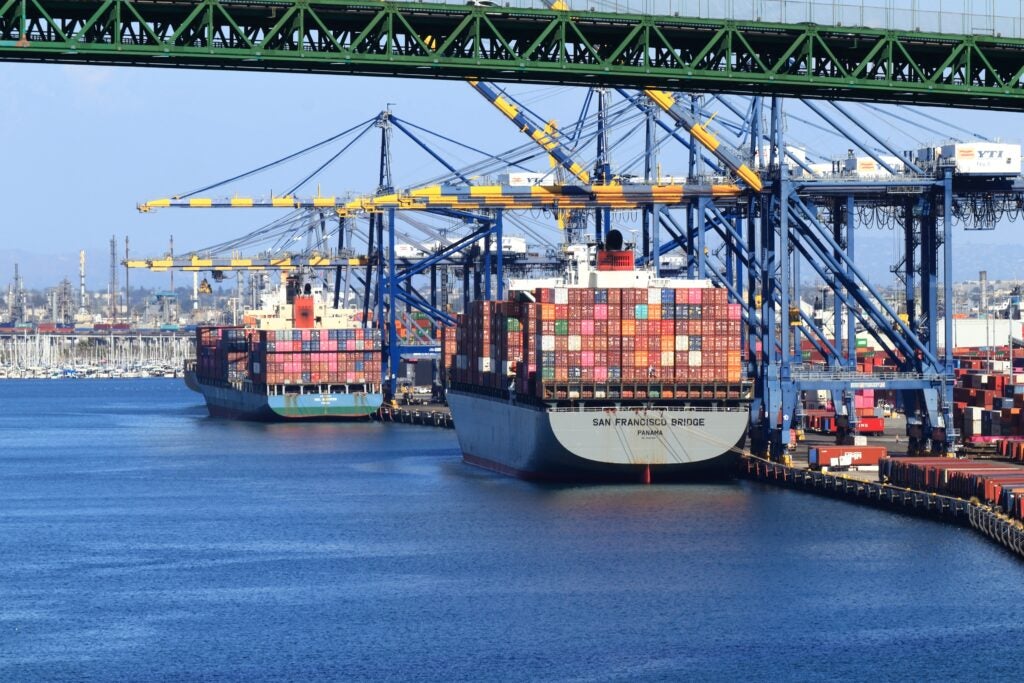
Unpacking the US-China Tariff Truce: Will It Revitalize Imports?
The recent US-China tariff truce, announced in late 2023, has sparked cautious optimism among trade experts and port authorities. With the Port of Los Angeles reporting a 30% frontloading rate amid lingering uncertainties, industry leaders are questioning whether the pause in tariffs will significantly boost import volumes or merely stabilize strained supply chains.
A Temporary Reprieve or Long-Term Solution?
The Biden administration’s decision to suspend certain tariffs on Chinese goods marks the first major de-escalation since the 2018 trade war began. According to U.S. Census Bureau data, Chinese imports had dropped 24% year-over-year in Q2 2023 before showing tentative recovery signs this quarter. The truce covers approximately $370 billion in affected goods, focusing on consumer electronics, machinery, and industrial components.
“This isn’t a rollback—it’s a strategic pause,” explains Dr. Lin Wei, senior fellow at the Peterson Institute for International Economics. “Both nations are buying time to reassess their positions without losing face. The real test will come when we see if either side makes structural concessions.”
Key aspects of the agreement include:
- Suspension of planned tariff increases on $112 billion in consumer goods
- Creation of bilateral working groups to address enforcement mechanisms
- Exclusions reinstated for 352 categories of industrial components
Port Authorities Cautiously Optimistic
Port of Los Angeles Executive Director Gene Seroka struck a measured tone during last week’s press briefing: “While we welcome any reduction in trade friction, our docks are still feeling the aftershocks of pandemic-era disruptions. Frontloading inventories at 30% suggests importers remain skeptical about long-term stability.”
Container volume data supports this assessment:
- September 2023 imports: 407,000 TEUs (down 15% from 2022 peak)
- Empty containers shipped back to Asia: 42% of total outflow
- Average dwell time: 4.1 days (improved from 2022’s 11-day crisis)
The Frontloading Factor: Security Blanket or Overhang Risk?
Retailers and manufacturers had aggressively stockpiled Chinese goods ahead of anticipated tariff hikes—a practice known as frontloading. With inventories at 30% above seasonal norms according to Descartes Datamyne, some analysts warn this could dampen the truce’s immediate impact.
“Inventory-to-sales ratios suggest many sectors won’t need to ramp up orders until Q2 2024,” notes supply chain consultant Maria Vasquez. “The question is whether this truce lasts long enough to matter when the restocking cycle begins.”
Contrasting perspectives emerge across industries:
- Consumer electronics: 18% inventory surplus may delay new orders
- Automotive: Just 7% buffer with urgent need for EV components
- Apparel: 35% overstock likely to suppress holiday season imports
Geopolitical Undercurrents Shape Trade Winds
Beyond economic factors, the truce reflects calculated political maneuvering. With 2024 elections looming, the Biden administration faces pressure to curb inflation while maintaining a tough-on-China stance. Meanwhile, Beijing grapples with its own economic slowdown, needing export stability to offset domestic consumption dips.
Recent developments add complexity:
- China’s manufacturing PMI hovering at 49.5 (contraction territory)
- U.S. inflation moderating to 3.7% but still above target
- Ongoing tech restrictions limiting semiconductor trade
“This isn’t a return to pre-2018 norms,” warns former USTR negotiator James Carter. “Both nations are simply too far down the decoupling path. What we’re seeing is managed competition with occasional ceasefires.”
What’s Next for Importers and the Supply Chain?
Industry watchers identify three critical markers that will determine the truce’s effectiveness:
- Q4 2023 import volumes: Will the traditional holiday surge materialize?
- Inventory drawdown rates: How quickly will overstocked sectors reorder?
- Bilateral working group outcomes: Can they resolve non-tariff barriers?
The National Retail Federation projects a 4-6% year-over-year increase in holiday imports if the truce holds, while the National Association of Manufacturers emphasizes that predictability matters more than tariff levels for long-term planning.
As the global trade landscape evolves, businesses must balance cautious optimism with contingency planning. Those wanting deeper analysis can access our full trade policy briefing with sector-specific projections and risk assessments.
See more CCTV News Daily