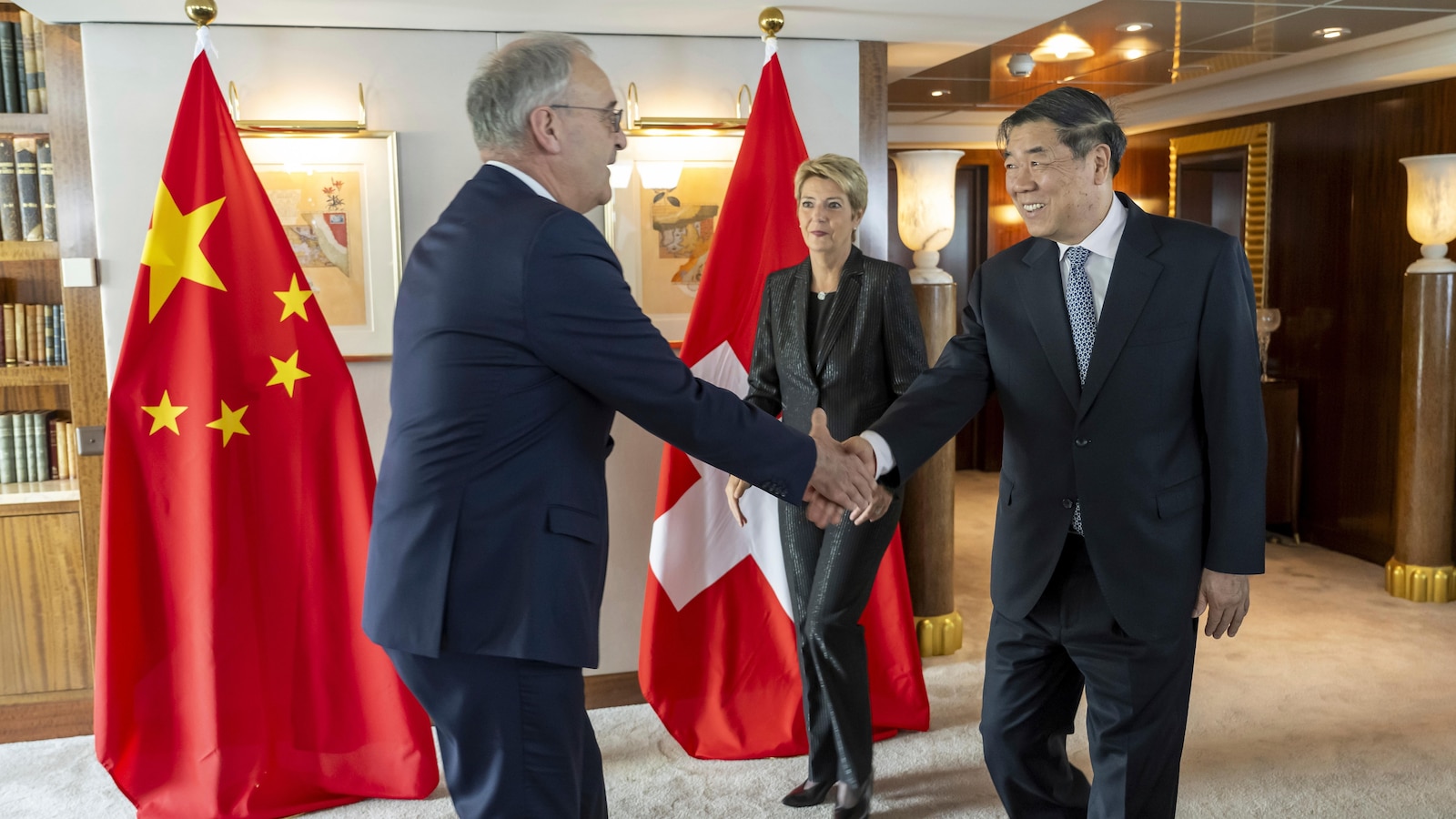
Senior US and Chinese trade officials met in Geneva this week to negotiate escalating tariff disputes that threaten to destabilize global markets. The high-stakes discussions, held on Tuesday and Wednesday, aim to de-escalate tensions after both nations imposed billions in retaliatory duties. With the world’s two largest economies accounting for 40% of global GDP, analysts warn failure to reach compromise could trigger supply chain disruptions and inflationary pressures worldwide.
High-Stakes Negotiations Amid Rising Economic Headwinds
The Geneva talks mark the first face-to-face meeting between US Trade Representative Katherine Tai and Chinese Commerce Minister Wang Wentao since both countries implemented sweeping trade restrictions earlier this year. According to WTO data, the conflict has already impacted $360 billion in bilateral trade, with US tariffs averaging 19% on Chinese imports and China countering with 21% duties on American goods.
“This isn’t just about tariffs anymore—it’s about establishing rules for 21st century economic competition,” said Dr. Evelyn Park, senior fellow at the Center for Strategic Trade Studies. “Both sides recognize the current trajectory is unsustainable, but finding middle ground requires political will on issues like technology transfers and market access.”
Key discussion points included:
- Phase-out timelines for existing Section 301 tariffs
- Chinese subsidies to domestic industries
- US restrictions on semiconductor exports
- Intellectual property protection mechanisms
Diverging Perspectives on Fair Trade Practices
While both nations publicly committed to “constructive dialogue,” their fundamental disagreements surfaced during the talks. US negotiators emphasized concerns over China’s state-led industrial policies, citing a 2023 OECD report showing Chinese government subsidies to manufacturers increased 14% year-over-year. Conversely, Chinese officials criticized US export controls as “economic coercion,” referencing Washington’s October 2022 semiconductor restrictions that affected $7 billion in Chinese tech imports.
“The Americans want us to abandon our development model while maintaining their technological dominance,” stated Professor Chen Wei of Tsinghua University via video commentary. “This isn’t negotiation—it’s demands disguised as diplomacy.”
However, business leaders expressed cautious optimism. The US-China Business Council released data showing 58% of member companies still consider China a top-three priority market, despite 72% reporting negative impacts from trade tensions. “Every month without resolution costs our members $1.4 billion in additional expenses,” noted council president Michael Hart.
Potential Outcomes and Global Implications
Analysts outline three probable scenarios emerging from the Geneva discussions:
- Limited Agreement: Partial tariff reductions with side agreements on agricultural purchases
- Standstill Accord: Freeze on new tariffs while establishing working groups
- Negotiation Breakdown: Escalation leading to broader decoupling
The International Monetary Fund projects Scenario 3 could reduce global GDP growth by 1.2% annually through 2027. Emerging markets would suffer most, with Vietnam, Mexico, and Malaysia—key links in alternative supply chains—facing export declines of 8-12%.
Technology and National Security: The Elephant in the Room
Beyond traditional trade issues, the talks grappled with national security concerns shaping economic policy. Recent US actions against TikTok and proposed restrictions on outbound investment highlight growing apprehension about technology leakage. Meanwhile, China’s updated Counter-Espionage Law has raised compliance risks for foreign firms.
“We’re witnessing the securitization of trade policy,” observed former WTO deputy director-general Alan Winters. “When every semiconductor becomes a national security asset, the traditional rules-based system struggles to adapt.”
Recent developments suggest both sides may compartmentalize issues:
- Possible tariff truce on consumer goods
- Continued restrictions on advanced technologies
- Enhanced screening of cross-border investments
What Comes Next in US-China Trade Relations?
While no breakthrough emerged from the Geneva meeting, both sides agreed to establish technical working groups—a signal that negotiations will continue. The next major opportunity for progress comes at November’s APEC summit, where President Biden and President Xi may hold bilateral talks.
For businesses navigating these uncertain waters, experts recommend:
- Diversifying supply chains beyond single-country dependencies
- Increasing investment in trade compliance systems
- Engaging policymakers through industry associations
As the global economy stands at a crossroads, these Geneva discussions may represent the last best chance to avoid a full-blown trade war. Stakeholders worldwide will watch closely whether economic pragmatism can prevail over geopolitical rivalry. For ongoing coverage of trade developments, subscribe to our policy briefing newsletter.
See more CCTV News Daily