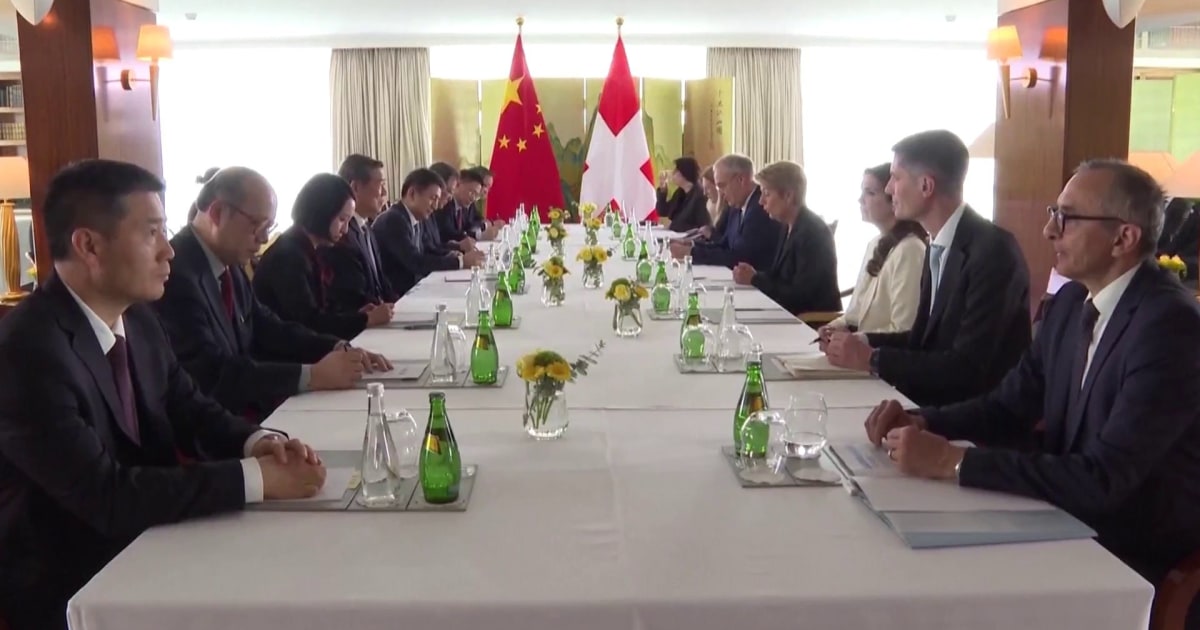
Unveiling the Trade Accord: Trump Hails Progress in US-China Negotiations
Former President Donald Trump announced significant progress in trade negotiations between the United States and China during a press briefing on Thursday, signaling a potential thaw in economic relations. The discussions, held via closed-door meetings over the past month, reportedly addressed longstanding disputes over tariffs, intellectual property, and market access. Trump framed the developments as a “major win” for both nations, though experts caution that concrete agreements remain elusive.
Key Breakthroughs in the Revised Trade Framework
According to insiders familiar with the negotiations, the two sides have tentatively agreed on:
- A phased reduction of Section 301 tariffs on $350 billion worth of Chinese goods
- Enhanced protections for American agricultural exports to China
- Revised enforcement mechanisms for intellectual property rights
“We’re seeing the most constructive dialogue since the 2020 Phase One deal,” remarked Dr. Evelyn Cho, senior fellow at the Peterson Institute for International Economics. “However, the devil will be in the implementation details—past agreements have struggled with compliance.”
Trade data underscores the high stakes: U.S.-China bilateral trade reached $691 billion in 2023 despite ongoing tensions, with China remaining America’s third-largest export market. The proposed tariff reductions could save American importers an estimated $18 billion annually, based on U.S. Census Bureau figures.
Divergent Reactions From Policy Circles
The announcement has drawn mixed responses across the political spectrum. Senate Majority Leader Chuck Schumer expressed skepticism, stating, “We need verifiable commitments on technology transfer and industrial subsidies before celebrating.” Meanwhile, business groups have welcomed the progress.
“This could mark a turning point for U.S. manufacturers grappling with supply chain costs,” said National Association of Manufacturers CEO Jay Timmons. “Our latest survey shows 68% of members view improved China relations as critical to competitiveness.”
Chinese state media struck a cautiously optimistic tone, with the Global Times editorial noting: “Both nations stand to gain from pragmatic cooperation, provided the U.S. abandons its zero-sum mentality.”
Historical Context and Persistent Challenges
The current negotiations build upon—and seek to remedy—shortcomings in previous agreements. The 2020 Phase One deal achieved only 58% of its export purchase targets, per Chad Bown’s Peterson Institute analysis. Persistent issues include:
- Chinese state subsidies to domestic industries
- Restrictions on U.S. cloud computing and tech firms
- Diverging standards on data security and AI governance
Trump’s characterization of the progress contrasts with the Biden administration’s more measured approach. “These talks appear to focus narrowly on trade balances rather than structural reforms,” noted former USTR negotiator Wendy Cutler. “That may deliver short-term wins but leave core issues unresolved.”
Economic Implications for Key Industries
Sector-specific impacts are already coming into focus:
- Agriculture: Potential 25% increase in soybean exports if China lifts retaliatory tariffs
- Technology: Reduced restrictions could benefit semiconductor equipment makers
- Automotive: Possible relief for EV battery supply chains dependent on Chinese minerals
Market reactions were immediate, with the S&P 500 gaining 1.2% on the news. However, Treasury Secretary Janet Yellen warned, “We must maintain strategic protections even as we pursue constructive engagement.”
The Road Ahead: From Handshakes to Implementation
Observers identify three critical milestones for the emerging agreement:
- Formal signing expected by Q1 2025
- Establishment of a bilateral dispute resolution body
- Concrete timelines for tariff reductions
As negotiations continue, stakeholders emphasize the need for transparency. “The American public deserves clear details on how this differs from past efforts,” urged House Ways and Means Chair Jason Smith. Meanwhile, Chinese Vice Premier He Lifeng stressed the importance of “mutual respect and shared benefits” in ongoing talks.
The evolving accord presents both opportunities and risks. While reduced trade barriers could ease inflation pressures, some national security experts warn against conceding too much in sensitive technology sectors. As the world’s two largest economies navigate this delicate dance, the outcomes will reverberate through global markets for years to come.
For ongoing coverage of US-China trade developments, subscribe to our policy briefing newsletter.
See more CCTV News Daily