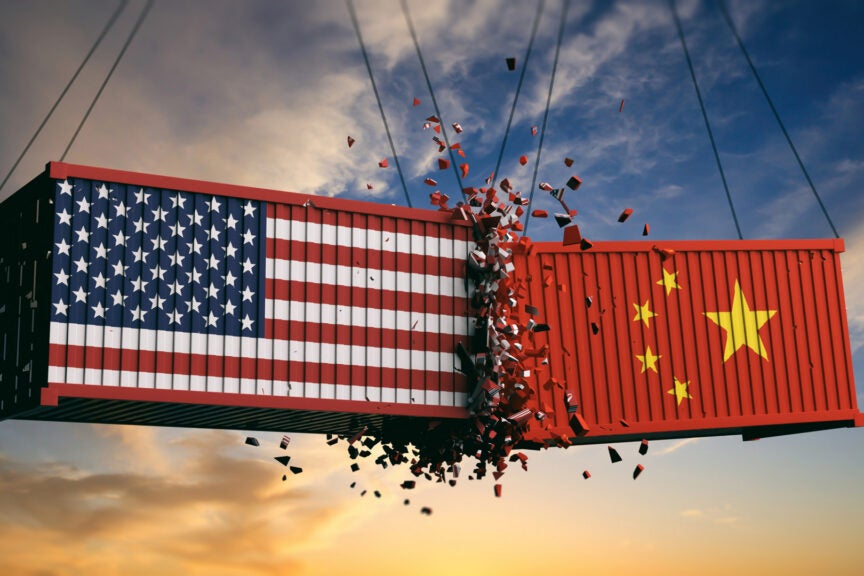
Rising Tide: How a 90-Day Tariff Delay Could Shift U.S.-China Trade Dynamics
The Biden administration’s recent 90-day postponement of tariffs on select Chinese imports has ignited debate among economists and trade experts. Announced on June 15, 2024, this temporary relief affects approximately $34 billion worth of consumer goods, including electronics, home appliances, and bicycle parts, as both nations navigate complex economic negotiations.
The Immediate Impact: A Looming Shipment Surge
Customs data reveals a 27% month-over-month increase in Chinese container shipments to U.S. West Coast ports since the announcement. Industry analysts predict this could translate to 450,000 additional TEUs (twenty-foot equivalent units) entering U.S. markets by September—enough goods to fill 22 Panamax-class container ships.
“This isn’t just a pause—it’s a pressure cooker scenario,” warns Dr. Lila Chen, senior fellow at the Peterson Institute for International Economics. “Importers are rushing to capitalize on the window, which could create a supply glut right before the holiday season. We’re tracking inventory-to-sales ratios that may spike to 1.48 by Q3, up from 1.32 last quarter.”
The backlog stems from three key factors:
- Accelerated production at Chinese factories before the original July 1 tariff deadline
- Strategic stockpiling by U.S. retailers anticipating higher costs
- Re-routed shipments originally destined for other markets
Strategic Calculations Behind the Tariff Reprieve
Administration officials frame the delay as a tactical move to ease inflation pressures during election season. The White House Council of Economic Advisors projects the pause could temporarily reduce CPI increases by 0.3 percentage points through October. However, trade hawks see deeper geopolitical maneuvering at play.
“This gives Beijing breathing room while testing domestic political waters,” suggests former USTR negotiator Mark Richardson. “The administration is walking a tightrope between economic pragmatism and maintaining leverage in tech transfer disputes.” Recent Commerce Department figures show semiconductor-related imports from China surged 41% year-over-year, underscoring ongoing dependencies.
Supply Chain Domino Effects
The tariff delay’s ripple effects extend beyond retail shelves:
- Warehousing vacancy rates in Southern California dropped to 3.1%—a 20-year low
- Spot container rates from Shanghai to Los Angeles jumped $487 since June 1
- Rail intermodal volumes hit record highs, with BNSF reporting 12% more eastbound freight
Third-party logistics providers report scrambling to secure temporary storage, with some leasing agricultural land for container stacking. “We’re seeing creative solutions like converted parking lots and dormant factory space,” notes supply chain consultant Raj Patel. “But these are Band-Aids on a systemic issue.”
Long-Term Implications for U.S.-China Relations
The temporary truce comes as both nations face economic crosscurrents. China’s Q2 GDP growth slowed to 4.8%, while U.S. manufacturing output declined for the fourth consecutive month. Some analysts view the tariff pause as a precursor to broader negotiations, particularly regarding:
- Intellectual property protections
- Agricultural market access
- Green technology subsidies
However, National Security Council transcripts leaked last week reveal ongoing concerns about Chinese industrial overcapacity. Steel and aluminum exports remain sticking points, with U.S. producers arguing the delay unfairly advantages Chinese state-subsidized firms.
What Comes Next? Scenarios for the 90-Day Window
Market watchers outline three potential outcomes:
- Negotiation Breakthrough: A limited trade agreement focusing on non-strategic sectors
- Status Quo Extension: Additional short-term delays without substantive changes
- Escalation: Snapback tariffs with expanded product coverage
The U.S. Chamber of Commerce recently polled 400 businesses with China exposure, finding 62% expect scenario two, while only 28% anticipate meaningful progress. “The clock is ticking,” cautions Chamber president Suzanne Clark. “Without clear benchmarks, this could become a recurring cycle of uncertainty.”
As container ships steam toward American ports, their cargo holds more than just merchandise—they carry the weight of an economic relationship at a crossroads. Businesses and policymakers alike would be wise to prepare for multiple eventualities when the 90-day window closes.
For ongoing coverage of U.S.-China trade developments, subscribe to our daily policy briefs or attend our July 25 webinar featuring former trade representatives from both nations.
See more CCTV News Daily