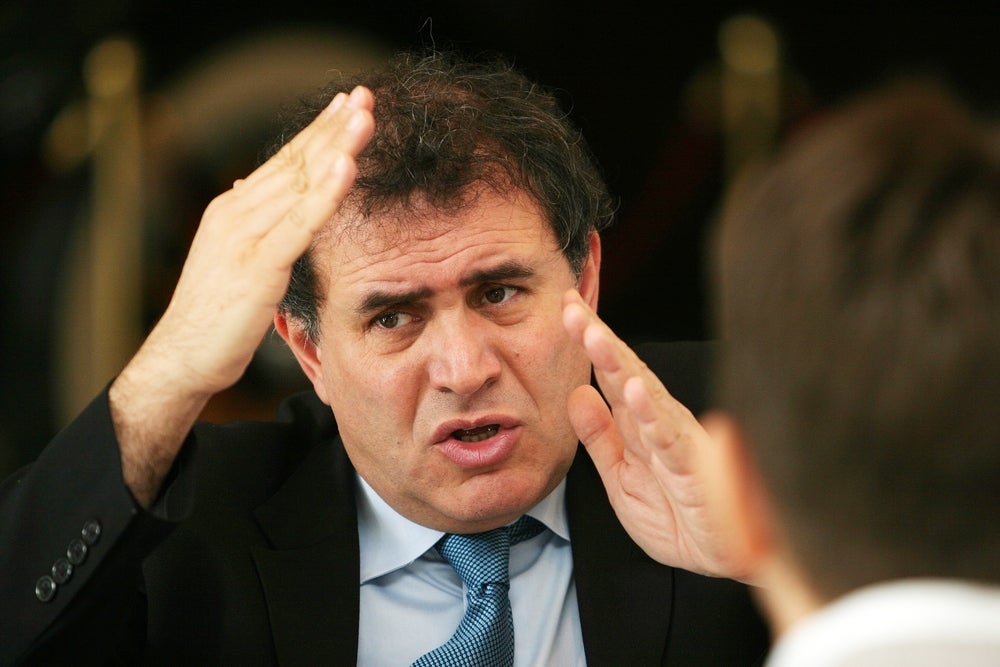
Dr. Doom Predicts 4% U.S. Growth by 2030 Amid Tariff Turbulence
In a striking departure from his typically bearish outlook, economist Nouriel Roubini—nicknamed “Dr. Doom” for his pessimistic forecasts—has projected 4% annual GDP growth for the U.S. economy by 2030, despite potential trade disruptions from a possible second Trump administration. The prediction, made during a New York economic summit last week, has ignited debate among analysts about America’s capacity for exceptional growth amid geopolitical and policy uncertainties.
The Optimistic Turn from a Notorious Pessimist
Roubini, who accurately predicted the 2008 financial crisis, based his surprising forecast on three key drivers:
- Technological acceleration: AI adoption could boost productivity by 1.5% annually
- Energy independence: U.S. shale production and green energy investments creating dual advantages
- Resilient consumer markets: Strong wage growth in key sectors offsetting inflationary pressures
“The U.S. is uniquely positioned to capitalize on what I call ‘the productivity trifecta,'” Roubini stated. “While I remain concerned about debt levels, the combination of demographic advantages, technological leadership, and energy security creates a growth cocktail we haven’t seen since the 1990s.”
The Tariff Wildcard in Growth Projections
The forecast comes as former President Donald Trump proposes across-the-board 10% tariffs on imports if re-elected—a policy the Peterson Institute estimates could:
- Reduce GDP by 0.5% annually in the short term
- Eliminate 505,000 U.S. jobs
- Increase consumer prices by 1.1%
Harvard economist Karen Dynan counters Roubini’s view: “Four percent growth requires either massive productivity miracles or unsustainable fiscal stimulus. With an aging workforce and projected trade headwinds, even 2.5% would be remarkable.” Recent Federal Reserve projections align closer to Dynan’s skepticism, forecasting just 1.8% potential growth through 2030.
Historical Precedents and Future Possibilities
The U.S. has achieved 4%+ annual growth in only 15 of the past 40 years, typically during recovery periods. However, three factors could make Roubini’s scenario plausible:
- AI adoption: McKinsey estimates generative AI could add $2.6-$4.4 trillion annually to global GDP
- Nearshoring: 62% of manufacturers have relocated operations to North America since 2020 (Kearney data)
- Energy exports: U.S. LNG shipments have grown 400% since 2016, creating new trade surpluses
JPMorgan Chase CEO Jamie Dimon recently noted: “The U.S. economy is rewriting the rulebook. We’re seeing simultaneous growth in manufacturing, tech, and energy—something no other advanced economy can match right now.”
Potential Roadblocks to Exceptional Growth
Several challenges could derail Roubini’s optimistic projection:
- Debt overhang: Federal debt at 123% of GDP (Congressional Budget Office)
- Political volatility: 68% of CEOs cite election uncertainty as growth risk (Business Roundtable Q2 survey)
- Global fragmentation: WTO warns trade growth slowing to just 1.7% in 2024
Former Treasury Secretary Larry Summers cautioned: “Growth projections often overlook structural constraints. Our infrastructure permitting process still takes 5-10 years, and we’re graduating fewer engineers per capita than China or India.”
The Path Forward: Policy Meets Innovation
To achieve sustained high growth, economists suggest a balanced approach:
- Investment: $1.2 trillion infrastructure law beginning to show impact
- Education: STEM graduates up 62% since 2010 (National Science Foundation)
- Trade strategy: 87% of recent manufacturing growth in tariff-protected industries (Brookings)
As the debate continues, one fact remains clear: The U.S. economy continues to defy expectations. Whether it can maintain this momentum through potential trade wars and technological disruption will determine if “Dr. Boom” becomes Roubini’s new nickname by 2030.
For deeper analysis of economic forecasts under different policy scenarios, subscribe to our weekly policy briefs.
See more CCTV News Daily