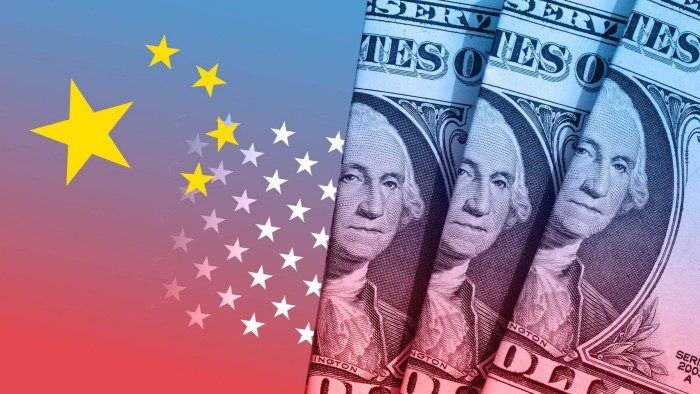
Unraveling Economic Resilience: A Deep Dive into US and Chinese Market Recoveries
As global markets navigate post-pandemic turbulence, the United States and China have charted starkly different recovery paths. While the US leverages consumer spending and tech innovation, China relies on manufacturing and state-driven investments. Analysts scrutinize key indicators—GDP growth, employment rates, and industrial output—to decode which model offers sustainable resilience amid rising inflation and geopolitical tensions.
Divergent Strategies: Stimulus vs. Stability
The US recovery, fueled by aggressive fiscal stimulus, saw a 5.2% GDP growth in Q3 2023, with unemployment hovering at 3.8%. Conversely, China’s cautious approach prioritized supply-chain stability over consumer handouts, achieving 4.9% growth but grappling with a youth unemployment crisis (21.3% as of mid-2023). “The US bet on disposable income, while China doubled down on infrastructure,” notes economist Dr. Lena Zhou. “Both face trade-offs: inflation versus stagnation.”
Key Drivers of US Economic Resilience
The US market’s rebound hinges on three pillars:
- Tech sector dominance: AI and green energy investments contributed $1.2 trillion to market cap in 2023.
- Consumer confidence: Retail sales grew 4.1% year-over-year, despite Fed rate hikes.
- Labor market flexibility: Gig economy expansion added 2.3 million jobs since 2022.
However, the Fed’s 5.25% benchmark rate risks stifling growth, with mortgage rates hitting 7.1%—a 23-year high.
China’s Playbook: Control Over Consumption
Beijing’s recovery leans on manufacturing (32% of GDP) and exports, which surged 6.2% in October 2023. Yet, property sector debt ($5.2 trillion) and weak domestic demand (1.8% retail sales growth) reveal vulnerabilities. “China’s state-led model ensures stability but sacrifices agility,” says MIT researcher David Kwan. “Their tech crackdowns erased $1.5 trillion from equities since 2021.”
Geopolitical Shadows and Future Projections
Trade decoupling looms large: US-China bilateral trade fell 14% in 2023. While the US eyes reshoring (semiconductor investments hit $52 billion this year), China pivots to Global South alliances, signing $284 billion in BRI deals. Analysts warn both economies must address structural flaws—US income inequality and China’s aging population—to sustain growth.
Investment Implications: Balancing Risk and Reward
Portfolios favoring US tech stocks gained 18% YTD, but emerging market bonds (6.7% yields) lure risk-tolerant investors. “Diversification is critical,” advises BlackRock’s Mei Chen. “The US offers innovation; China, undervalued industrials.”
What’s next? With 2024 growth forecasts at 2.1% (US) and 4.5% (China), adaptability will define long-term resilience. Investors should monitor Fed policies, China’s property bailouts, and green energy subsidies. Pro tip: Track the Nasdaq Golden Dragon Index for real-time China tech exposure.
See more CCTV News Daily