Unraveling the Evolution of U.S.-China Trade Policy
Over the past five decades, U.S.-China trade policy has transformed from cautious engagement to a complex web of tariffs, sanctions, and strategic competition. Since diplomatic relations normalized in 1979, economic ties between the two superpowers have weathered cycles of cooperation and conflict, reshaping global supply chains and geopolitical alliances. Today, as tensions escalate over technology dominance and national security, understanding this historical trajectory offers critical insights into the future of international trade.
From Nixon’s Opening to Permanent Normalized Trade Relations
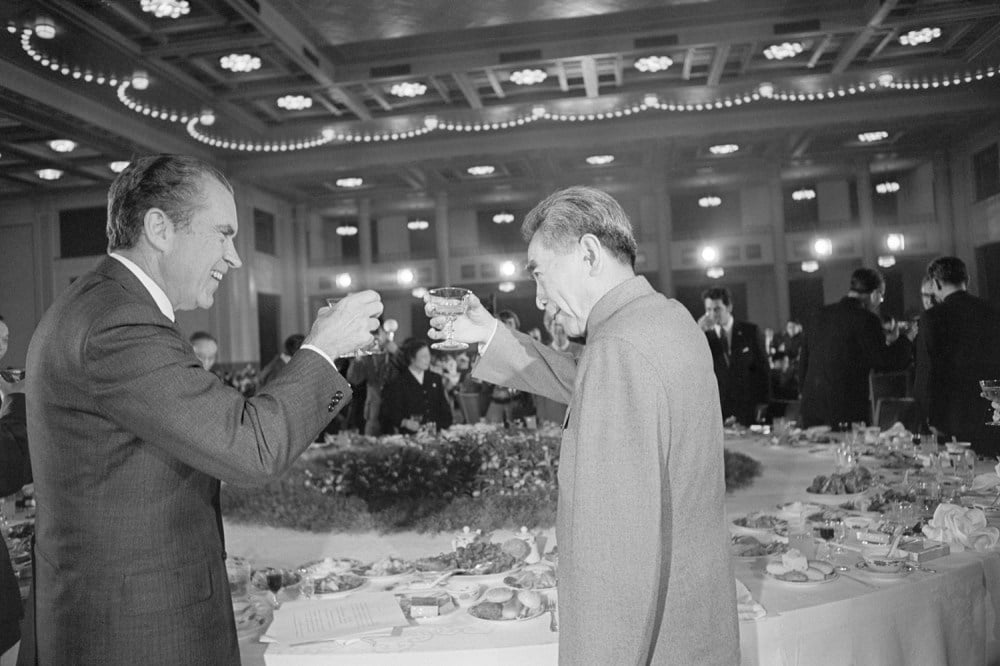
The modern U.S.-China trade relationship began with President Richard Nixon’s historic 1972 visit, which thawed Cold War hostilities. By 1979, the U.S. formally recognized China under the “One China” policy, paving the way for the 1980 U.S.-China Trade Agreement. This granted Most Favored Nation (MFN) status, slpping tariffs from 40% to single digits. “It was a calculated bet that economic integration would encourage political liberalization,” notes Dr. Linda Jacobson, a Georgetown University trade historian.
Key milestones followed:
- 2000: U.S. Congress approved Permanent Normalized Trade Relations (PNTR), facilitating China’s 2001 WTO entry
- 2001-2010: U.S. imports from China surged 296%, reaching $365 billion
- 2018: The U.S. trade deficit with China peaked at $419 billion
The Rise and Fall of Economic Interdependence
Initially, trade flourished under a symbiotic dynamic: China provided low-cost manufacturing, while the U.S. exported technology and agricultural goods. By 2015, China accounted for 21% of global manufacturing output, compared to America’s 18%. However, cracks emerged as Beijing’s state-led model clashed with Western expectations. “The assumption that China would converge toward free-market norms proved naive,” admits former U.S. Trade Representative Michael Froman.
Critical friction points included:
- Intellectual Property (IP) Theft: U.S. firms lost $225-$600 billion annually to IP violations
- Currency Manipulation: China’s yuan was undervalued by 15-40% from 2003-2013
- Subsidized Industries: State support for steel and solar panels distorted global markets
The Trade War Era and Its Lasting Impact
In 2018, President Trump imposed tariffs on $360 billion of Chinese goods, triggering retaliatory measures. The conflict escalated into a tech cold war, with Huawei sanctions and semiconductor export controls. By 2023, U.S.-China trade had declined 17% from its peak, as companies diversified supply chains to Vietnam, India, and Mexico.
Biden’s Strategic Competition Framework
While maintaining tariffs, the Biden administration shifted toward coalition-building. The CHIPS Act ($52 billion for domestic semiconductor production) and Indo-Pacific Economic Framework (IPEF) aimed to counter China’s influence. “This isn’t about decoupling but de-risking,” explains National Security Advisor Jake Sullivan. Yet, trade remains lopsided: China still supplies 90% of U.S. rare earth imports and 70% of solar panels.
Future Trajectories: Collaboration or Confrontation?
Experts diverge on the path forward. Optimists point to climate cooperation and $691 billion in 2022 bilateral trade as stabilizing forces. Pessimists warn of a “bifurcated” global economy, where U.S.-led and China-centric blocs compete. With 60% of Fortune 500 companies reliant on Chinese revenue, the stakes are monumental.
Key variables to watch:
- Taiwan: A flashpoint that could sever economic ties
- AI Leadership: Both nations vie for technological supremacy
- Third-Party Alliances: How ASEAN and the EU navigate tensions
As the world’s two largest economies recalibrate their relationship, businesses and policymakers must adapt to a new era of guarded interdependence. For deeper analysis, subscribe to our Global Trade Insights newsletter.
See more CCTV News Daily