Warren Buffett Challenges Trade Barriers: ‘Commerce Should Unite, Not Divide’
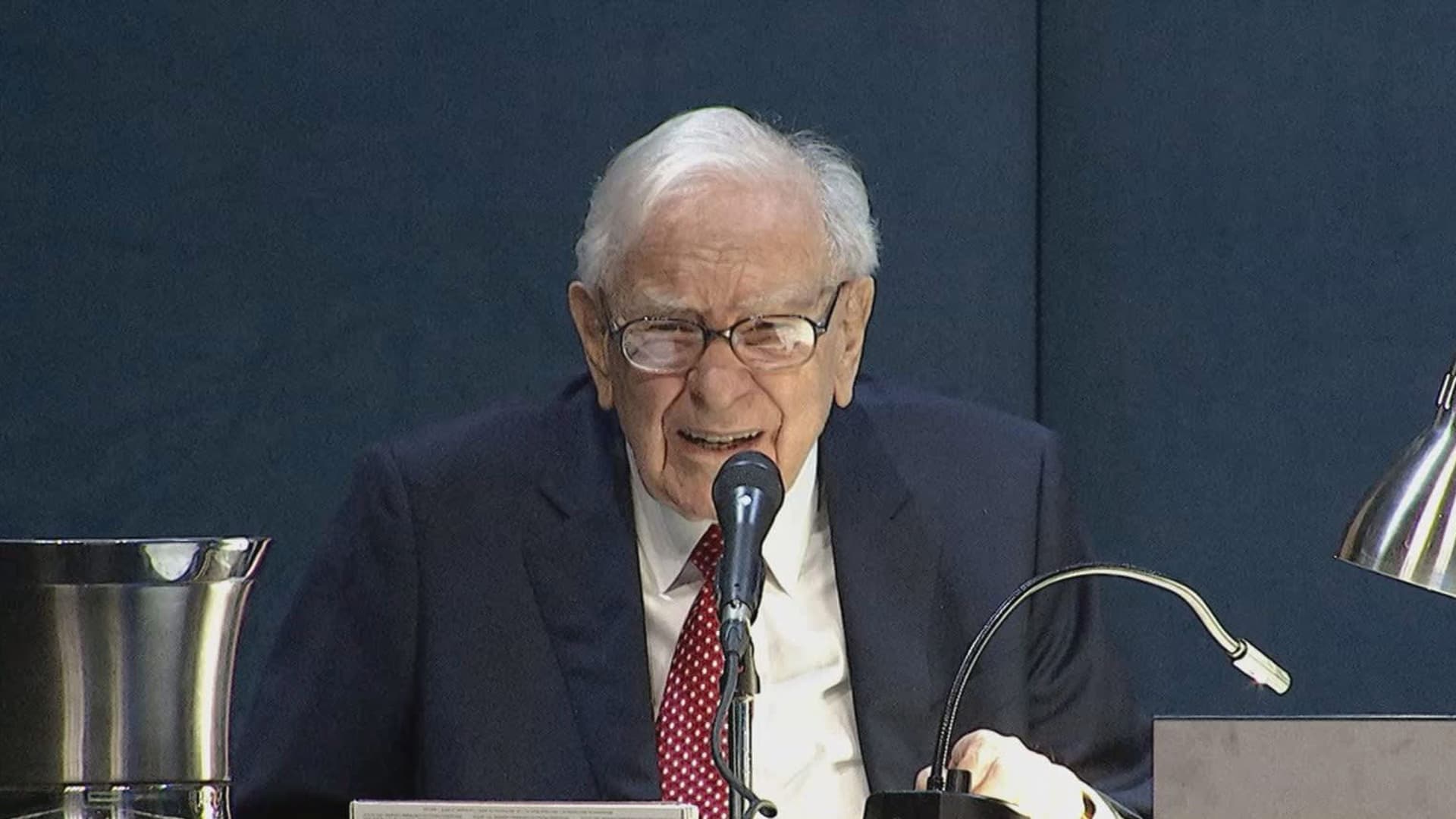
In a powerful critique of modern economic policies, billionaire investor Warren Buffett has condemned rising trade barriers and protectionist measures, urging nations to embrace global cooperation. Speaking at Berkshire Hathaway’s annual shareholder meeting in Omaha, Nebraska, Buffett argued that tariffs and isolationist strategies harm long-term economic growth. His remarks come as geopolitical tensions and trade wars reshape international commerce.
The Case Against Protectionism
Buffett, whose investment philosophy hinges on long-term value creation, warned that trade restrictions create artificial economic divisions. “When we build walls instead of bridges, everyone pays the price,” he stated. The 93-year-old financier cited historical examples where free trade boosted prosperity, including post-WWII Europe and America’s own industrial rise.
Recent data supports Buffett’s stance:
- The World Bank estimates global trade restrictions have increased 300% since 2010
- IMF research shows tariffs reduce GDP growth by 0.5-1.5% in affected nations
- U.S. import prices rose 12% following 2018-2020 trade wars (Bureau of Labor Statistics)
Economic Fallout of Trade Wars
Buffett highlighted how protectionist policies often backfire. “Tariffs are taxes dressed in nationalistic clothing,” he remarked, noting how U.S. steel tariffs ultimately raised costs for domestic manufacturers. Automotive companies, for instance, faced $10 billion in additional expenses, according to a 2021 Center for Automotive Research study.
Dr. Evelyn Cho, trade economist at Columbia University, explains: “Trade barriers create short-term political wins but long-term economic pain. Supply chains adapt by becoming less efficient, and consumers ultimately foot the bill.” She points to the solar panel industry, where U.S. tariffs led to a 23% drop in installations (Solar Energy Industries Association).
The Geopolitical Dimensions of Trade
Buffett’s intervention comes amid escalating U.S.-China tensions and renewed European trade defenses. While acknowledging national security concerns, he cautioned against overreach: “We must distinguish between protecting vital interests and stifling mutually beneficial exchange.”
Contrasting views emerge from trade hawk policymakers:
- Senator Marco Rubio (R-FL) argues: “Strategic industries require protection to prevent foreign domination”
- The U.S. Trade Representative’s 2023 report claims tariffs recovered 300,000 manufacturing jobs
However, MIT research found 75% of those jobs were offset by losses in downstream industries, revealing protectionism’s complex ripple effects.
Pathways to Collaborative Commerce
Buffett proposed three principles for reform:
- Multilateral agreements: Revitalize WTO frameworks rather than unilateral actions
- Sector-specific solutions: Address genuine security concerns without blanket restrictions
- Innovation investment: Compete through advancement rather than protection
Singapore’s trade model offers compelling evidence. By maintaining open markets while investing heavily in education and technology, the city-state achieved 5.8% average GDP growth over 20 years (World Bank).
The Future of Global Trade
As supply chains reorganize and new technologies emerge, Buffett’s vision faces both challenges and opportunities. The rise of digital commerce and renewable energy sectors may create natural alignment between nations’ economic interests.
Dr. Rajiv Mehta, director of the Global Trade Institute, observes: “The next decade will test whether we repeat 1930s-style fragmentation or develop smarter systems that balance competition with cooperation.” With 60% of global trade now involving intermediate goods (UNCTAD), the stakes for getting this balance right have never been higher.
For business leaders and policymakers, Buffett’s message serves as both warning and roadmap. Those seeking to understand these complex dynamics can access Berkshire Hathaway’s full shareholder letter, which elaborates on these trade principles with characteristic clarity.
The Oracle of Omaha’s perspective reminds us that while borders define nations, commerce has always thrived by connecting them. In an era of division, this lesson may prove more valuable than any single investment.
See more CCTV News Daily