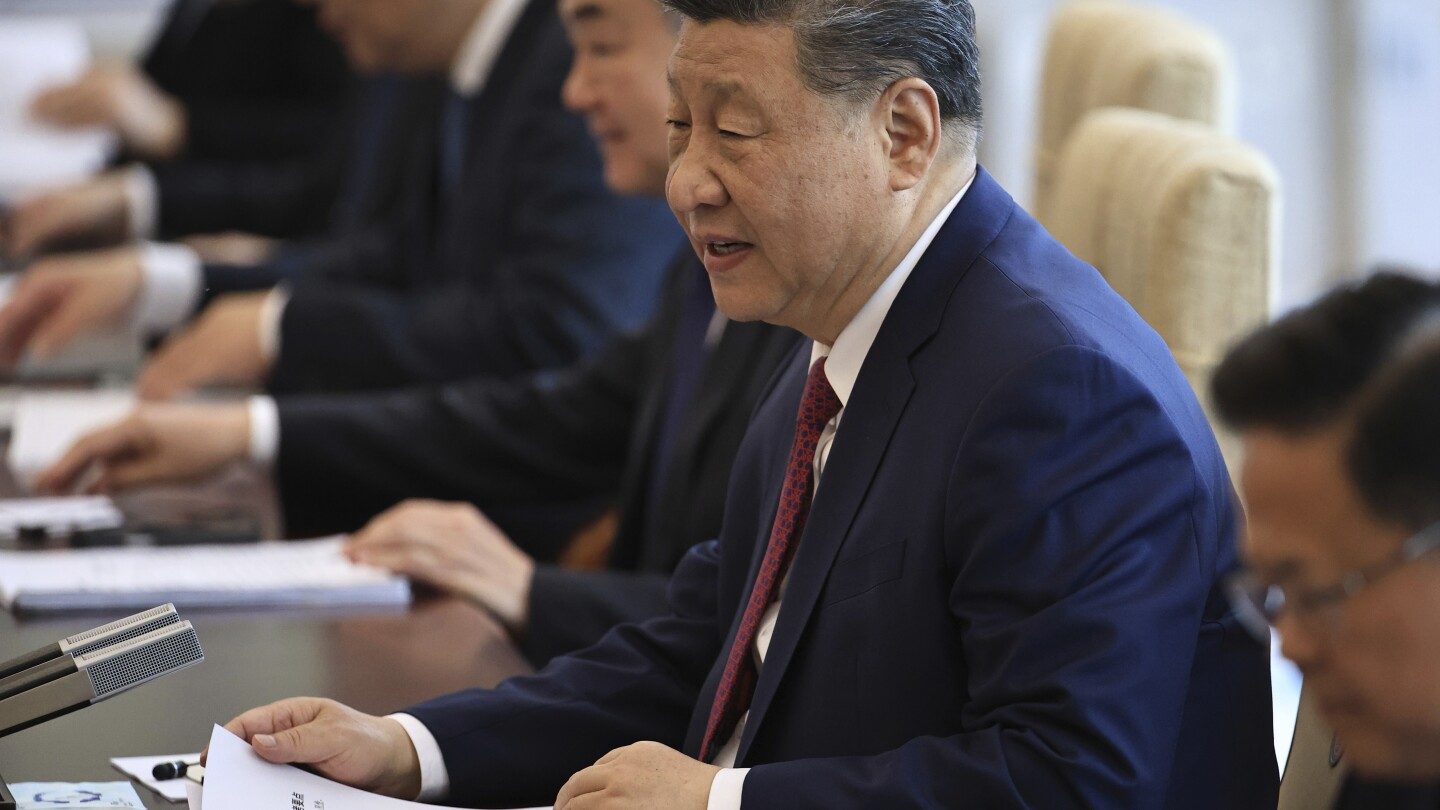
Xi Jinping’s Warning on Tariff Wars: No Winners in Southeast Asia’s Trade Battles
Chinese President Xi Jinping issued a stark warning during his recent Southeast Asia tour, declaring that tariff wars produce “no true victors” as regional economies grapple with rising trade tensions. Speaking at a regional summit in Vietnam on November 15, 2023, Xi emphasized how protectionist policies could destabilize fragile supply chains and slow post-pandemic recovery across ASEAN nations, where China remains the largest trading partner.
The Economic Toll of Rising Trade Barriers
Xi’s remarks come as Southeast Asia faces mounting pressure from global trade fragmentation. According to World Bank data, ASEAN countries saw a 5.7% decline in cross-border commerce during 2022-2023—the sharpest drop since the 2008 financial crisis. The region’s export-dependent manufacturing hubs, from Thailand’s automotive sector to Vietnam’s electronics industry, remain particularly vulnerable to tariff escalations.
“When elephants fight, the grass suffers,” said Dr. Li Wei, a trade economist at Singapore Management University. “ASEAN nations accounting for 28% of global semiconductor exports simply cannot afford prolonged trade wars between major powers.”
Recent developments underscore these concerns:
- The U.S. imposed 25% tariffs on $18 billion worth of Vietnamese steel and aluminum in July 2023
- EU carbon border taxes could cost Southeast Asian exporters $16 billion annually by 2030
- Indonesia temporarily halted nickel ore exports to protect domestic processing industries
China’s Strategic Positioning in Regional Trade
Analysts note Xi’s messaging aligns with China’s broader economic diplomacy. As Western nations reshore manufacturing, Beijing has positioned itself as a stabilizing force for developing economies. China-ASEAN trade reached $722 billion in 2022, with Chinese investment flows increasing 18% year-over-year.
“President Xi isn’t wrong about the collateral damage,” remarked Malaysian Trade Minister Tengku Zafrul Aziz. “But nations must also protect strategic industries. The challenge lies in balancing sovereignty with interdependence.”
The data reveals complex interdependencies:
- 35% of ASEAN’s intermediate goods imports come from China
- Chinese firms operate 12 industrial parks across Cambodia, Laos, and Myanmar
- RCEP trade bloc covers 30% of global GDP, with China as anchor economy
Diverging Perspectives on Trade Protectionism
While Xi advocates for open markets, some Southeast Asian policymakers defend targeted tariffs. Thailand recently imposed 10% duties on Chinese synthetic fibers to safeguard its textile industry, while the Philippines maintains agricultural import restrictions.
“There’s growing recognition that blanket free trade benefits don’t always trickle down,” explained Manila-based development economist Corazon Cruz. “When Cambodian rice farmers compete with subsidized Chinese imports, temporary safeguards become necessary.”
The policy debate centers on several key questions:
- How can nations nurture domestic industries without provoking retaliation?
- Should developing economies prioritize short-term protection or long-term integration?
- What role should multilateral institutions play in mediating disputes?
The Ripple Effects Across Global Supply Chains
Xi’s warnings gain urgency as tariff conflicts disrupt carefully calibrated production networks. A 2023 McKinsey analysis found that 40% of apparel brands shifted orders from China to ASEAN countries—only to face new trade barriers in destination markets. The resulting chaos has increased manufacturing costs by an estimated 12-15%.
Vietnam’s experience proves instructive. The country became a beneficiary of U.S.-China tensions, with exports to America growing 17% annually since 2018. However, recent U.S. anti-dumping investigations into Vietnamese solar panels and furniture demonstrate how quickly advantages can erode.
“We’re witnessing a domino effect,” noted supply chain expert Haruto Watanabe. “One tariff begets another, until entire industries become unviable. Southeast Asia’s export miracle was built on predictability—that foundation is now cracking.”
Pathways Forward for ASEAN Economies
As tensions persist, regional leaders explore damage mitigation strategies. Indonesia and Malaysia are accelerating domestic processing capabilities to move up value chains, while Singapore champions digital trade agreements to bypass physical barriers. The ASEAN Secretariat proposes establishing an early warning system for potential trade conflicts.
Key considerations for policymakers include:
- Diversifying export markets beyond traditional Western partners
- Strengthening regional payment systems to reduce dollar dependency
- Investing in workforce upskilling to enhance competitiveness
Xi concluded his remarks by advocating for “patient dialogue over punitive measures,” but with U.S.-China relations remaining frosty, Southeast Asia appears caught in an economic crossfire. As the region navigates these turbulent waters, the costs of protectionism may ultimately validate Beijing’s cautionary message.
For deeper analysis on ASEAN trade policies, subscribe to our weekly economic briefing or attend our upcoming webinar “Trade Wars in the Asian Century” featuring leading regional experts.
See more CCTV News Daily